
What This Article Does NOT Recommend: This guide does not recommend self-diagnosing nutritional deficiencies, stopping prescribed medication in favour of supplements or foods, or treating any health condition with supplements. All supplement use should be discussed with a qualified healthcare professional. Nothing in this article constitutes medical advice.
Every year, hundreds of millions of people ask the same question: are supplements necessary, or can food do the same job? It is a question worth answering carefully — because both the supplement industry and much of the wellness media have a financial interest in the answer, and the evidence is more nuanced than either side usually presents.
This guide gives you a direct, evidence-based comparison of natural foods versus dietary supplements — covering bioavailability, quantified nutrient comparisons, real-life scenarios, and a clear framework for when each approach genuinely works. It includes Nigerian and West African superfoods that rival popular supplement categories, and a practical decision framework grounded in NIH, WHO, and EFSA guidance.
Scope note: Dietary supplements support general wellness. Nothing in this article constitutes medical advice or replaces professional healthcare guidance.
Direct Answer: Whole natural foods are the stronger foundation for long-term health. They deliver nutrients in a complete food matrix that supplements cannot fully replicate. Supplements are necessary for confirmed deficiencies, pregnancy, restricted diets, and specific clinical needs. The evidence-based approach is food first — supplements only for verified gaps.
TL;DR — 5 things to know before reading further:
- Whole foods win on long-term nutrition, safety, cost, and absorption breadth — supplements win on precision, speed, and correcting gaps food cannot fill
- Three nutrients most adults genuinely need from supplements regardless of diet: vitamin D (limited in food), B12 (absent in plant foods), and folic acid pre-conception
- Supplement form matters as much as the supplement itself — magnesium oxide absorbs at ~4%; magnesium glycinate at ~60%
- Baobab fruit contains 6–10× more vitamin C than oranges per 100g; moringa provides 9× more iron than spinach per gram — Nigerian superfoods with documented potency
- Always test before supplementing — blood tests for vitamin D, ferritin, and B12 cost less than three months of supplements you may not need
Key Takeaways
- Whole foods deliver nutrients inside a complete food matrix — improving absorption through enzymes, fibre, and co-nutrients that isolated supplements do not provide
- Supplements have a well-documented role for confirmed deficiencies, pregnancy, restricted diets, and malabsorption conditions
- Baobab fruit contains approximately 6–10 times more vitamin C than oranges per 100g — one of multiple African superfoods with measurable supplement-comparable profiles
- Non-haem iron from plant foods is absorbed at 2–20% efficiency versus 15–35% for haem iron — a real gap that supplements can fill when deficiency is confirmed
- The global supplement market reached USD 214.8 billion in 2025 — largely driven by dietary gaps that food alone is not consistently closing
- Fat-soluble vitamins (A, D, E, K) carry genuine overdose risk from supplementation; whole food sources do not
- Always consult a healthcare professional before supplementing, especially if pregnant, on medication, or managing a chronic condition
Natural foods provide the strongest nutritional foundation through the food matrix effect. Dietary supplements are evidence-based for vitamin D insufficiency, B12 deficiency in vegans, folic acid pre-conception, and clinically confirmed deficiencies. For most healthy adults, food first — supplements only for verified, specific gaps.
What You’ll Learn in This Article
What Most Articles Get Wrong About This Debate
Most coverage on natural foods versus supplements frames it as a competition — it is not. Both approaches serve different functions, and treating them as rivals leads to equally wrong conclusions in both directions.
Here are the three most common errors in popular coverage of this topic:
- Error 1 — Treating “balanced diet” as a universal baseline. Research consistently shows the majority of adults in developed countries do not eat a genuinely balanced diet. A 2019 USDA dietary intake analysis found that most Americans fall short of recommended intakes for vitamin D, calcium, potassium, and dietary fibre — even in a high-income food environment. According to the 2020–2025 Dietary Guidelines for Americans, these are classified as nutrients of public health concern precisely because dietary intake is consistently inadequate at population scale. Telling people to “eat a balanced diet instead of supplementing” assumes a baseline most people do not have.
- Error 2 — Ignoring bioavailability differences between supplement forms. Not all supplements are equal. Magnesium oxide has approximately 4% absorption; magnesium glycinate absorbs at 50–80%. Articles that say “supplements have poor absorption” are comparing the worst-performing forms — not the category as a whole. See the bioavailability section for worked examples.
- Error 3 — Dismissing whole food advantages as abstract. The food matrix effect is measurable, not theoretical. Vitamin C from whole foods is accompanied by bioflavonoids that extend its antioxidant activity. Iron from food comes with co-factors that regulate absorption based on the body’s current iron status — a safety mechanism absent in iron supplements.
The accurate position, supported by NIH ODS, WHO, and EFSA guidance, is context-dependent: food provides a superior nutritional foundation; supplements fill specific, identifiable gaps where food cannot reliably deliver adequate amounts.
Why Do People Rely on Supplements?
People rely on supplements because modern diets, depleted food systems, and lifestyle constraints have created real nutritional gaps that food alone is not consistently closing for large portions of the global population.
The global dietary supplement market was valued at approximately USD 214.8 billion in 2025 and is projected to reach USD 377.9 billion by 2032 — growth that reflects genuine demand, not just marketing.
- Nutrient-depleted soils: Decades of intensive agriculture have measurably reduced mineral content in UK and US food crops — studies report declines of 15–76% in calcium, magnesium, iron, and zinc across staple vegetables since the 1950s
- Processed food dominance: In the US and UK, ultra-processed foods account for more than 50% of daily calorie intake for many adults — providing energy but limited micronutrient value
- Vitamin D insufficiency: According to NIH ODS, an estimated 40% of US adults and up to 50% of UK adults have insufficient vitamin D levels — a gap that diet alone cannot correct at population scale
- Restricted diets: Vegan and vegetarian diets create documented gaps for B12, omega-3 DHA, zinc, and iron that cannot be closed by plant foods alone without supplementation
- Life-stage demands: Pregnancy, breastfeeding, and older age (65+) increase requirements for folic acid, iron, vitamin D, and B12 beyond what most dietary patterns reliably provide
What Are Dietary Supplements? (Definition)
A dietary supplement is any concentrated nutrient preparation — vitamin, mineral, herb, amino acid, or bioactive compound — in capsule, tablet, powder, or liquid form, intended to fill dietary gaps, not replace food or treat disease.
In full: a dietary supplement is a concentrated preparation of one or more nutrients manufactured in capsule, tablet, powder, or liquid form, intended to supplement — not replace — dietary intake. A whole natural food is an unprocessed or minimally processed food retaining its complete nutrient profile, including fibre, water, enzymes, and naturally occurring co-factors that interact during digestion to improve absorption.
The regulatory definitions matter globally. In the United States, the FDA classifies dietary supplements under the DSHEA framework — they are not drugs and cannot be approved for treating, preventing, or curing disease. In the UK and EU, they are regulated as food products under EFSA’s permitted health claims list. In Nigeria, NAFDAC oversees all registered supplement products sold domestically. These frameworks confirm the same principle: supplements fill dietary gaps — they do not act as medicines.
Bioavailability: Why Food Often Wins on Absorption
Bioavailability — the proportion of a nutrient actually absorbed and used by the body — is where whole foods most consistently outperform isolated supplements, due to the food matrix effect.
Whole foods deliver nutrients inside a food matrix: a complex structure of fibre, water, enzymes, and co-nutrients that interact during digestion to regulate absorption, protect nutrients from degradation, and in some cases actively improve uptake. Supplements deliver nutrients in isolated form, without this matrix.
Do supplements work better than food for absorption?
It depends entirely on the nutrient and the supplement form. For nutrients where food delivers adequate amounts with co-factors (vitamin C, general B vitamins, most minerals), food wins. For nutrients where food is structurally insufficient (vitamin D, B12 for vegans), or where clinical deficiency requires fast correction, well-chosen supplements match or exceed food. The critical variable — almost always ignored in popular coverage — is supplement form.
Real example 1 — Iron absorption: plant food vs supplement
According to the NIH ODS Iron Fact Sheet, non-haem iron from plant foods (spinach, lentils, moringa) is absorbed at approximately 2–20% efficiency. Eating vitamin C-rich foods alongside plant iron — a squeeze of lemon on lentils — increases that absorption by up to 3–6 times.
However, in confirmed iron deficiency anaemia, dietary adjustment alone is too slow for clinical correction. Therapeutic iron supplementation is necessary — but form still matters: ferrous sulphate absorbs at 20–30%, while iron bisglycinate absorbs at up to 90% with fewer gastrointestinal side effects. Supplement form selection matters as much as the decision to supplement.
Real example 2 — Vitamin C: baobab powder vs ascorbic acid
Baobab fruit pulp contains approximately 200–500mg of vitamin C per 100g — roughly 6–10 times the concentration in oranges (50mg per 100g). Baobab vitamin C is delivered alongside bioflavonoids, polyphenols, and prebiotic fibre — co-nutrients that extend its antioxidant activity beyond what isolated ascorbic acid achieves alone. For general daily vitamin C support, baobab powder in juice or smoothies is a measurably strong whole food option. For very high therapeutic doses (1,000mg+ under medical guidance), ascorbic acid supplements offer precision that food cannot match at realistic serving sizes.
Key principle: bioavailability is not fixed — it depends on the nutrient, its food or supplement form, the co-nutrients consumed alongside it, and the individual’s current status. The comparison is never simply “food good, supplements bad.” See the decision guide below for practical application.
Natural Foods vs Supplements: Full Comparison
Across eight key factors, whole foods win on safety, breadth, and cost — supplements win on precision, speed, and correcting gaps food cannot fill.
| Factor | Whole Natural Foods | Dietary Supplements | Practical Verdict |
|---|---|---|---|
| Nutrient form | Embedded in complete food matrix with fibre, enzymes, co-factors | Isolated, extracted, or synthetic — variable absorption by form | Food wins for broad daily nutrition |
| Bioavailability | Generally higher due to food matrix and co-nutrient interactions | Highly variable: poor for some forms (magnesium oxide ~4%), excellent for others (magnesium glycinate ~60%) | Depends entirely on supplement form chosen |
| Breadth of benefit | Broad — delivers multiple nutrients, fibre, phytonutrients simultaneously | Targeted — addresses one or a small number of specific gaps | Food wins for general wellness; supplements win for precision |
| Overdose risk | Very low for most nutrients in whole food form | Real risk for fat-soluble vitamins (A, D, E, K) and minerals such as iron at high doses | Food is consistently safer; supplement dosing requires care |
| Cost | Generally lower, especially locally sourced produce | Variable; quality GMP-certified supplements carry genuine cost | Food wins on cost for most nutrients |
| Convenience | Requires preparation; perishable; seasonally variable | Consistent, portable, shelf-stable, precise dose every time | Supplements win on convenience for travel and consistency |
| Speed of correction | Slow — inadequate for clinical deficiency correction alone | Fast — can correct confirmed deficiencies at therapeutic doses | Supplements win when clinical correction is the goal |
| Safety ceiling | High — self-regulating through food matrix absorption mechanisms | Lower — fat-soluble vitamins and minerals can accumulate to harmful levels | Food wins on long-term safety |
Pros and Cons: Natural Foods vs Supplements
Understanding the limitations of each approach prevents the two most common errors: over-relying on food when clinical correction is needed, and over-supplementing when food is already sufficient.
Natural Foods
- Pros: Complete food matrix improves absorption; provides fibre, phytonutrients, and satiety simultaneously; virtually no overdose risk at normal intake; lower cost for most nutrients; culturally familiar and sustainable long-term
- Cons: Preparation time required; perishable; nutrient content varies by soil quality, freshness, and cooking method; insufficient for correcting clinical deficiencies at therapeutic speed; B12 unavailable in plant foods; vitamin D inadequate in most diets regardless of variety
Dietary Supplements
- Pros: Precise, consistent dosage regardless of diet; essential for B12 (vegans), vitamin D (low sun), and folic acid (pregnancy); corrects clinical deficiencies at therapeutic speed; convenient, portable, shelf-stable; regulated under DSHEA, EFSA, and NAFDAC frameworks
- Cons: Isolated nutrients lack the food matrix benefit; quality varies widely — GMP certification and third-party testing required; fat-soluble vitamins carry real overdose risk; some forms have poor bioavailability (magnesium oxide ~4%); higher cost than equivalent food sources for most nutrients
Scientific Evidence Summary
The current evidence supports targeted supplementation for specific populations and needs — not routine supplementation for healthy adults eating varied diets. Here is what the research actually shows.
| Finding | Source | Practical Implication |
|---|---|---|
| Multivitamin supplementation in generally healthy adults showed no significant reduction in cardiovascular disease, cancer, or all-cause mortality across multiple large randomised controlled trials | USPSTF Systematic Review, 2022; multiple Cochrane reviews | Healthy adults eating a varied diet do not have evidence-based grounds for routine multivitamin use. The USPSTF 2022 review found insufficient evidence to recommend multivitamins for cancer or CVD prevention in non-pregnant adults |
| Folic acid supplementation (400–800 mcg daily) before and during early pregnancy reduces neural tube defect risk by approximately 50–70% | WHO Guidelines on Folic Acid Supplementation; CDC recommendations | One of the strongest evidence bases for any supplement — food sources alone cannot reliably deliver the consistent pre-conception dosing required. WHO recommends supplementation begin at least one month before conception |
| Vitamin D insufficiency affects an estimated 40% of US adults and up to 50% of UK adults. Dietary sources alone are insufficient to correct insufficiency for most people | NIH ODS Vitamin D Fact Sheet (2025) | Vitamin D is among the most consistently evidence-supported supplements for general adults — particularly indoor workers and those at high latitudes. Supplementation with 1,000–2,000 IU D3 daily is widely recommended by clinical bodies |
| Non-haem iron absorption from plant sources is 2–20%, compared to 15–35% for haem iron from animal sources. Vitamin C co-consumption increases non-haem absorption by up to 3–6 times | NIH ODS Iron Fact Sheet | For non-clinical low iron, dietary strategies combining plant iron with vitamin C are effective. For confirmed anaemia, therapeutic iron supplementation (preferably bisglycinate form) is required for clinical-speed correction |
| Moringa oleifera leaf powder supplementation in malnutrition intervention studies showed measurable improvement in serum ferritin, vitamin A, and vitamin C status in supplemented groups | Multiple studies in Journal of Nutrition and Food Science; WHO moringa nutritional assessments | Moringa has a legitimate evidence base as a whole food nutritional intervention — particularly for populations with limited access to varied produce. Not pharmaceutical-grade, but documented nutritional potency |
| High-dose vitamin E supplementation (400 IU/day or more) was associated with increased all-cause mortality in a meta-analysis of 19 clinical trials | Miller ER et al., Annals of Internal Medicine — cited in NIH ODS safety guidance | Fat-soluble vitamin supplementation above recommended levels carries documented risk. This finding reinforces the principle that supplementation must be targeted and appropriately dosed — not assumed universally beneficial |
Clinical vs Non-Clinical Use: When Supplements Are Appropriate
The most important distinction most articles skip: clinical and non-clinical supplement use have different evidence bases, appropriate doses, and safety profiles. Confusing the two leads to both under-supplementing when it matters and over-supplementing when it does not.
| Factor | Clinical Use | Non-Clinical / Wellness Use |
|---|---|---|
| Who determines need | Healthcare professional, based on blood test or diagnosis | Individual choice, based on general wellness goals |
| Evidence strength | Strong — randomised controlled trials, NICE/WHO/NIH guidelines | Mixed — many wellness supplements have limited or no RCT support |
| Dosage | Therapeutic — higher, time-limited, medically monitored | Maintenance — lower, longer-term, self-monitored |
| Examples (confirmed value) | Iron for anaemia, folic acid in pregnancy, B12 for vegans, vitamin D for deficiency, AREDS formula for AMD | Vitamin C for general immune support, magnesium for sleep quality, omega-3 for cardiovascular health (conditional evidence) |
| Examples (limited evidence) | N/A — clinical use requires evidence | Collagen for skin, biotin for hair in non-deficient individuals, most “detox” supplements |
| Overdose risk | Managed through prescribing and monitoring | Real risk if multiple products with same nutrient are combined without checking total intake |
| Interaction risk | Managed by prescribing clinician | Buyer’s responsibility — requires verification with pharmacist or doctor |
| Role of food | Supplementary to clinical intervention; food foundation still recommended | Food-first principle applies — supplements should fill genuine gaps, not duplicate adequate intake |
Quick Decision Guide: When to Use Food vs Supplements
Use this framework to determine whether a food-based or supplement-based approach is appropriate for your situation. This is a general guide — not a substitute for professional assessment.
| Your Situation | Recommended Approach | Why |
|---|---|---|
| Healthy adult eating a varied, balanced diet | Food first; no routine supplementation needed for most nutrients | A genuine varied diet covers most micronutrient needs; the USPSTF 2022 review found no significant mortality benefit from multivitamins in this population |
| Vitamin D insufficiency (indoor lifestyle, limited sun) | Supplement: vitamin D3, 1,000–2,000 IU daily | Dietary sources are insufficient for most people to maintain adequate 25(OH)D levels without sun exposure — confirmed by NIH ODS |
| Vegan or strict plant-based diet | Supplement: B12 is non-negotiable; consider vitamin D, zinc, algae DHA | B12 is absent from plant foods in bioavailable form — deficiency is guaranteed over time without supplementation |
| Pregnancy or pre-conception | Supplement: folic acid 400–800 mcg essential; full prenatal with iron and iodine | WHO recommends folic acid supplementation begin at least one month before conception — food sources cannot deliver the consistent pre-conception dosing required |
| Confirmed iron deficiency (diagnosed by blood test) | Supplement: therapeutic iron under healthcare guidance | Dietary correction is too slow to restore haemoglobin at the required clinical rate — see supplement priorities |
| General immune support goal (no deficiency confirmed) | Food first: vitamin C-rich produce, zinc-containing foods, moringa | Evidence for immune supplements in non-deficient adults is mixed; food sources deliver additional phytonutrients that support immune function |
| Over 65 years old | Supplement vitamin D and B12; assess calcium individually | Vitamin D skin synthesis and stomach-acid-dependent B12 absorption both decline with age regardless of dietary intake |
| Managing a chronic condition | Always consult a healthcare professional first | Supplement-drug interactions and nutrient requirements are highly individual in chronic disease management |
The core principle, mid-page: Food = nutritional foundation. Supplements = precision tool for specific, verified gaps. The sections below cover Nigerian superfoods with documented potency, five real-life persona scenarios, a beginner supplement guide, cost comparison, common mistakes, and the combining strategy that brings both together.
African and Global Superfoods That Rival Common Supplements
Several Nigerian and West African whole foods offer documented nutritional value that directly rivals widely used supplement categories — making them a globally relevant advantage for any buyer, not only those in West Africa.
Note: moringa powder, baobab powder, and dried ginger are widely available internationally through health food retailers and online suppliers — not only in West Africa. Their nutritional value is relevant to buyers in the US, UK, Canada, Australia, and globally.
The visual comparison below shows how natural foods and dietary supplements differ across key factors — including nutrient density, absorption form, and real-world use cases for each superfood pairing.
Visual Summary: Natural Foods vs Supplements — Nutrient Comparison
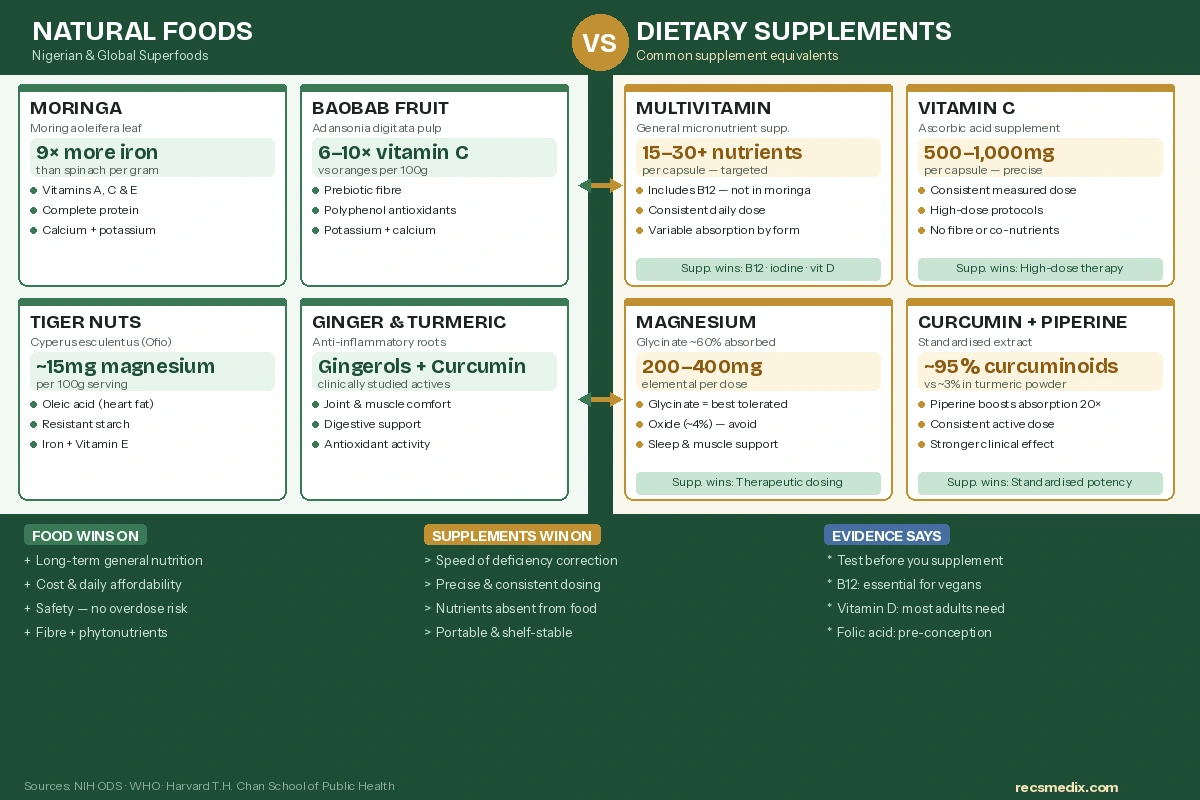
As shown above, whole foods provide broader nutritional benefits through the food matrix effect, while supplements offer precision dosing and consistency — particularly for nutrients where food alone cannot deliver therapeutic amounts.
1. Moringa vs Multivitamin Supplements
Dried moringa leaf powder contains approximately 9× more iron than spinach, 17× more calcium than milk by weight, 10× more vitamin A than carrots, and 15× more potassium than bananas — based on published nutritional analyses of Moringa oleifera. Its protein profile is complete, containing all essential amino acids. Published intervention studies in Sub-Saharan Africa documented measurable improvement in serum ferritin, vitamin A, and vitamin C in populations receiving moringa as a food intervention. Supplement advantage: moringa does not supply B12, iodine, or vitamin D in meaningful quantities — making it an incomplete multivitamin substitute for vegans or older adults.
2. Baobab vs Vitamin C Supplements
Baobab fruit pulp contains approximately 200–500mg of vitamin C per 100g — compared to approximately 50mg per 100g in oranges. That is 6–10 times the concentration, making it one of the richest natural vitamin C sources globally. It also delivers prebiotic fibre, polyphenol antioxidants, and potassium. Supplement advantage: for very high-dose protocols (1,000mg+ daily under healthcare guidance), ascorbic acid supplements deliver consistent, measured dosing that baobab powder cannot match at realistic serving sizes.
3. Ginger and Turmeric vs Anti-Inflammatory Supplements
Gingerols and shogaols in fresh and dried ginger have demonstrated anti-inflammatory activity in multiple clinical trials, including studies on joint pain in osteoarthritis. Curcumin from turmeric has an extensive research base, though bioavailability from turmeric powder alone is low without piperine (black pepper extract). Supplement advantage: standardised curcumin-piperine supplements provide consistent, measured active compound levels unavailable from cooking quantities of turmeric.
4. Tiger Nuts vs Magnesium Supplements
Tiger nuts contain approximately 13–17mg of magnesium per 100g, alongside oleic acid (a heart-supportive monounsaturated fat), resistant starch (a prebiotic fibre), and iron. A useful daily magnesium food source — particularly for those avoiding dairy. Supplement advantage: for confirmed hypomagnesaemia or therapeutic use (migraine prophylaxis, sleep protocols), magnesium glycinate supplements deliver 200–400mg elemental magnesium per dose — impractical from food alone. See supplement priorities for form guidance.
5. Bitter Leaf vs Liver Support Supplements
Bitter leaf (Vernonia amygdalina) contains sesquiterpene lactones and flavonoids with demonstrated hepatoprotective activity in laboratory and animal studies. Clinical human trial data remains limited. Supplement advantage: milk thistle (silymarin) has a substantially larger and more robust clinical evidence base for liver support than bitter leaf extracts in current published literature.
Browse Herbal Supplements at Recs-Medix for products combining traditional plant actives with verified GMP documentation.
Real-Life Scenarios: Which Approach Fits Your Situation?
The right balance between food and supplements depends on your dietary pattern, life stage, and specific nutritional gaps — not a universal recommendation that applies to everyone.
The real-life decision guide below maps five common dietary situations to their most appropriate food-first approaches and evidence-based supplement recommendations — use it to identify which scenario most closely matches your own.
Real-Life Decision Guide: When Supplements Are Necessary vs When Food Is Enough
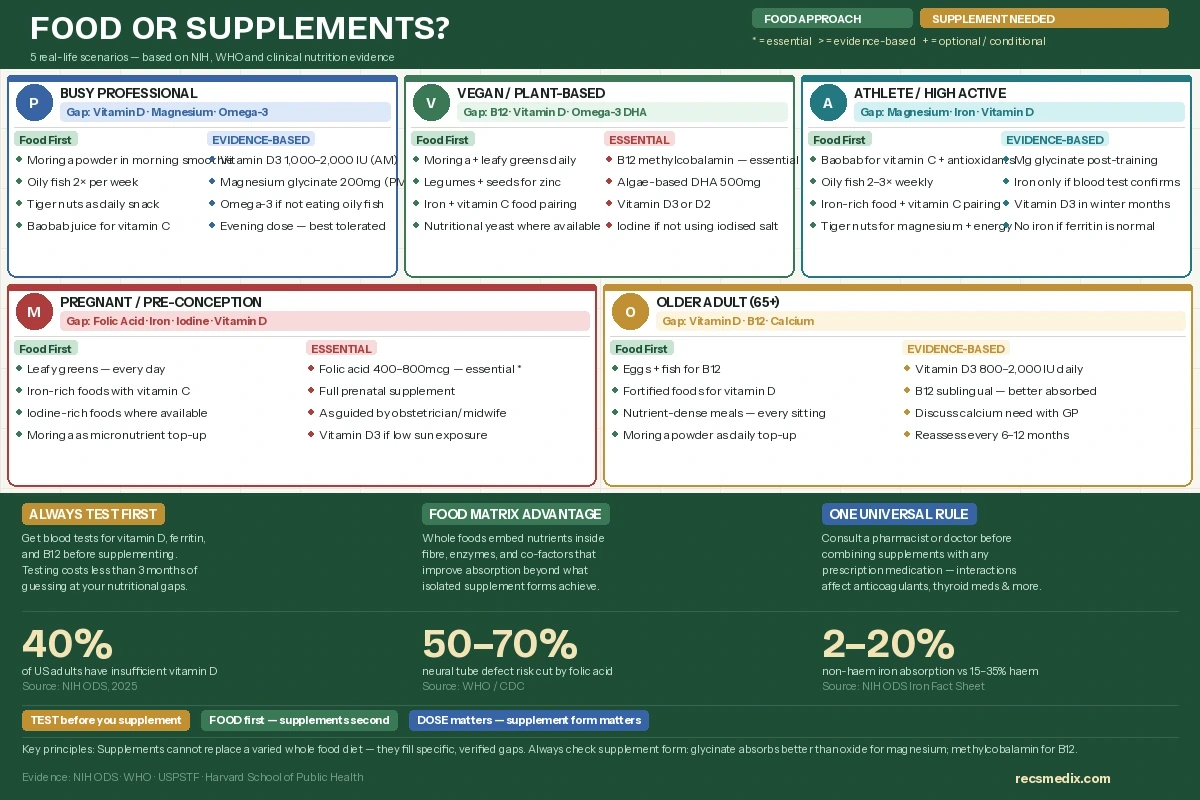
As shown above, supplements are essential in specific, well-defined situations — particularly for vegans (B12), pregnant women (folic acid), and those with limited sun exposure (vitamin D). For most other scenarios, a food-first approach supported by selective supplementation is the evidence-based standard.
Browse evidence-based supplements matched to your specific situation: Essential Vitamins & Minerals — vitamin D, B12, magnesium, iron, and omega-3, all with full ingredient documentation and international tracked shipping.
| Who You Are | Likely Nutritional Gap | Food-Based Approach | Supplement Recommendation |
|---|---|---|---|
| Busy urban professional — convenience foods most days, limited cooking time | Vitamin D, magnesium, fibre, omega-3 | Moringa powder in morning smoothie; tiger nuts as snack; oily fish (mackerel, sardines) twice weekly | Vitamin D3 (1,000–2,000 IU), magnesium glycinate (200mg evening) — both evidence-based for gaps common in this lifestyle |
| Vegan or plant-based — no animal products; health-conscious but restricted | B12 (critical), vitamin D, zinc, omega-3 DHA | Moringa, leafy greens, legumes, seeds daily; iron + vitamin C pairing at meals | B12 methylcobalamin — non-negotiable; algae DHA (500mg); vitamin D3 or D2. Browse Essential Vitamins & Minerals |
| Athlete or highly active — training 5+ days per week | Magnesium (lost through sweat), iron (female athletes), vitamin D | Baobab for vitamin C and antioxidants; regular oily fish for vitamin D; iron-rich foods with vitamin C | Magnesium glycinate post-training; iron only if blood test confirms deficiency; vitamin D3 in winter months |
| Pregnant or planning pregnancy — any dietary pattern | Folic acid (critical pre-conception), iron, iodine, vitamin D | Increase leafy greens; eat iron-rich foods with vitamin C; include iodine-rich foods where available | Folic acid 400–800mcg (start before conception); full prenatal supplement as recommended by obstetrician |
| Older adult (65+) — reduced appetite; limited outdoor activity | Vitamin D, B12, calcium (consider), protein | Eggs and fish for B12; fortified foods for vitamin D; moringa powder as daily micronutrient top-up | Vitamin D3 (800–2,000 IU); B12 sublingual or methylcobalamin (preferred for absorption at this age); discuss calcium with healthcare provider |
Supplement Priorities by Need: Where to Start
Not all supplements are equally evidence-supported. This framework prioritises by evidence strength — from Tier 1 (strong population-level need) to supplements that carry documented risk at common doses.
| Priority Tier | Supplement | Who Needs It | Evidence Strength |
|---|---|---|---|
| Tier 1 — High priority | Vitamin D3 | Adults with limited sun exposure; indoor workers; UK, Canada, northern US residents in winter | Strong — NIH ODS, SACN (UK), Endocrine Society guidelines; 40% of US adults insufficient per NIH 2025 |
| Tier 1 — High priority | Folic acid | All women of reproductive age and pre-conception | Very strong — reduces neural tube defect risk 50–70% (WHO/CDC); must begin pre-conception |
| Tier 1 — High priority | Vitamin B12 | Vegans and strict vegetarians; adults over 50 | Strong — deficiency is progressive and irreversible if prolonged; absent in plant foods |
| Tier 2 — Situation-specific | Iron | Premenopausal women with confirmed deficiency; pregnant women; athletes (female) | Strong when deficiency confirmed — avoid supplementing without blood test |
| Tier 2 — Situation-specific | Magnesium glycinate | Adults with poor dietary magnesium; athletes; individuals with disrupted sleep | Moderate — glycinate form well-tolerated; evidence for sleep and muscle function |
| Tier 2 — Situation-specific | Omega-3 DHA/EPA | Non-fish eaters; vegans; individuals with cardiovascular risk factors | Moderate — conditional evidence for triglyceride reduction; algae DHA for vegans |
| Tier 3 — Low priority for most | General multivitamin | Adults with highly restricted diets where identifying gaps is impractical | Weak for healthy adults — USPSTF 2022 found no significant mortality benefit |
| Not recommended without clinical indication | High-dose vitamin A, vitamin E, beta-carotene (smokers) | Should not be taken without professional guidance | Negative — associated with increased harm in specific populations in RCT data |
Browse Essential Vitamins & Minerals at Recs-Medix — vitamin D, B12, iron, magnesium, and omega-3 options with full ingredient documentation and international tracked shipping. For immune-specific options, see Immune Support.
Recommended Supplements for Beginners
If you are new to supplementing and want to start with only the highest-value options, these three cover the most common population-level gaps at low cost and low risk.
Beginner Supplement Priorities — start here before adding anything else:
- Vitamin D3 — 1,000–2,000 IU daily with a fat-containing meal. One of the most widely insufficient nutrients globally, regardless of dietary quality. Take in the morning with breakfast. Cost: approximately USD 5–10 / GBP 4–8 per month.
- Vitamin B12 (methylcobalamin) — if vegan, vegetarian, or over 50. Non-negotiable for plant-based diets; absorption declines with age. Sublingual form preferred for older adults. Cost: approximately USD 5–12 / GBP 4–10 per month. Browse Essential Vitamins & Minerals.
- Magnesium glycinate — 200mg in the evening. The best-tolerated form for sleep quality and muscle function — not magnesium oxide (poor absorption). Only add this if your diet is consistently low in dark leafy greens, seeds, legumes, and nuts. Cost: approximately USD 15–25 / GBP 12–20 per month.
These three supplements address the most common, evidence-supported gaps at low cost. Get a blood test before adding anything beyond this baseline. See Supplement Priorities by Need for a full tiered framework.
Approximate Monthly Cost Comparison
For most nutrients, food is equal in cost or cheaper than supplements — and delivers broader benefits. The exceptions are vitamin D, B12 for vegans, and folic acid pre-conception, where supplements are both necessary and inexpensive.
| Nutrient Goal | Food Approach (est. monthly) | Supplement Approach (est. monthly) | Cost Verdict |
|---|---|---|---|
| General vitamin C support | USD 4–8 / GBP 3–6 (citrus, bell peppers, baobab powder) | USD 8–15 / GBP 6–12 (1,000mg vitamin C supplement) | Food wins — lower cost, additional fibre and phytonutrients |
| General immune + micronutrient support | USD 10–20 / GBP 8–16 (varied vegetables, eggs, oily fish, moringa powder) | USD 15–30 / GBP 12–25 (quality multivitamin) | Food wins — comparable or lower cost with superior food matrix benefits |
| Vitamin D maintenance (1,000–2,000 IU) | Not achievable through food alone for most people | USD 5–10 / GBP 4–8 (D3 softgels) | Supplement necessary — very low cost for one of the highest-value supplements |
| Magnesium support | USD 8–15 / GBP 6–12 (tiger nuts, leafy greens, seeds, legumes) | USD 15–25 / GBP 12–20 (magnesium glycinate) | Food marginally cheaper; supplement better for consistent therapeutic dosing |
| Iron support (non-clinical) | USD 10–18 / GBP 8–15 (red meat, lentils, moringa, vitamin C pairing) | USD 10–20 / GBP 8–16 (iron bisglycinate) | Comparable; food preferred for non-clinical support; supplement required for anaemia correction |
| Vitamin B12 (vegan) | Not available in plant foods | USD 5–12 / GBP 4–10 (methylcobalamin B12) | Supplement essential — low cost, no food alternative for vegans |
| Omega-3 support | USD 15–30 / GBP 12–25 (oily fish 2–3 servings/week) | USD 15–30 / GBP 12–25 (quality fish oil or algae DHA) | Comparable cost; algae DHA preferred for vegans; food provides additional protein |
The single biggest supplement mistake most people make: supplementing nutrients they already have at adequate levels — because they never got a blood test first. This is especially common with iron (where excess supplementation without confirmed deficiency can cause harm) and vitamin E (where high-dose supplementation was associated with increased all-cause mortality in a meta-analysis of 19 clinical trials). The fix is two minutes and a blood test — not a supplement.
Common Supplement Mistakes to Avoid
The majority of supplement-related problems — wasted money, ineffective results, and safety risks — come from a small number of avoidable errors. Here is what to watch for.
- Over-supplementing without testing. Taking vitamin D, iron, or B12 supplements without a blood test to confirm deficiency means you may be supplementing nutrients you already have at adequate levels. For iron specifically, excess supplementation in non-deficient individuals can cause gastrointestinal harm and, over time, iron overload. Get tested first — see the decision guide above.
- Choosing the wrong supplement form. Magnesium oxide absorbs at approximately 4% — meaning most of a standard magnesium tablet passes through unused. Magnesium glycinate absorbs at 50–80%. Similarly, cyanocobalamin B12 is less effective for older adults than methylcobalamin. Form matters as much as the supplement itself.
- Combining products without checking total nutrient intake. Taking a multivitamin, a separate vitamin D supplement, and a fortified protein powder simultaneously can push fat-soluble vitamin intake above safe upper limits. Total daily intake — across all products, food, and fortified items — must be considered together.
- Buying low-quality products without GMP verification. Supplements are not subject to pre-market safety approval in most markets. Products without GMP manufacturing standards, third-party testing, or traceable batch documentation may not contain what the label states. See how Recs-Medix verifies its range for what quality checks look like in practice.
- Treating supplements as a substitute for diet. Supplements fill specific, identifiable gaps — they do not replicate the breadth of a nutrient-dense whole food diet. Relying on a multivitamin in place of dietary improvement addresses the symptom, not the cause, and delivers inferior long-term health outcomes based on current evidence.
- Not reassessing regularly. Nutritional needs change with age, season, health status, and diet. A supplement that was necessary at one life stage may no longer be needed — or may need a dosage adjustment. Reassess every 6–12 months.
For a comprehensive guide to safe supplement purchasing — covering counterfeit products, undeclared ingredients, GMP signals, and seller verification — read: 7 Supplement Buying Mistakes to Avoid.
Why supplement quality matters: The supplement industry is largely self-regulated in most markets. Products manufactured under GMP (Good Manufacturing Practice) standards are subject to production controls that reduce contamination, inconsistent potency, and mislabelling. Third-party testing from accredited laboratories — such as USP, NSF International, or ISO-accredited labs — adds independent verification that a brand’s own quality claims cannot provide. When you buy from a retailer that verifies supplier documentation, GMP compliance, and batch information at intake, those checks have already been done on your behalf before the product reaches you.
How to Combine Natural Foods and Supplements Safely
A food-first strategy with targeted supplementation for confirmed gaps is the approach supported by current nutritional science. This six-step framework takes under five minutes to apply.
- Assess your actual diet — not your ideal diet. A typical week of what you genuinely eat is the baseline. Be honest about which food groups are consistently missing, not just occasionally absent.
- Get tested for deficiencies before supplementing. Blood tests for vitamin D (25-hydroxyvitamin D), B12, and ferritin (iron stores) are widely available and cost less than three months of supplements you may not need.
- Fill food gaps with food first. Vitamin C low? Add baobab powder, bell peppers, or citrus. Magnesium low? Add tiger nuts, leafy greens, and pumpkin seeds. Iron low? Combine plant iron sources with vitamin C at the same meal. See Nigerian superfoods section for specific food-to-supplement comparisons.
- Supplement only confirmed or dietary-pattern-specific gaps. Use the test result or a known pattern gap (B12 on a vegan diet, folic acid pre-conception, vitamin D in winter) to select the right supplement at the right dose.
- Space supplements correctly. Iron and calcium compete for absorption — do not take together. Fat-soluble vitamins (A, D, E, K) absorb better with a fat-containing meal. Magnesium glycinate is better tolerated in the evening. B12 absorbs well at any time of day.
- Reassess every 6–12 months. Needs change with age, season, health status, and diet. What was necessary at one stage may no longer apply.
Sample Day: Food-First Approach with Targeted Supplementation
| Time | Food Approach | Supplement (if applicable) |
|---|---|---|
| Morning | Pap, smoothie, or porridge with moringa and baobab powder; eggs or sardines for B12 and protein | Vitamin D3 (with breakfast fat for absorption); folic acid if pre-conception or pregnant |
| Midday | Rice, yam, or whole grain with leafy vegetables and a lean protein; squeeze of lemon on iron-rich beans or lentils | Iron supplement if confirmed deficiency (away from calcium-rich foods; with vitamin C) |
| Afternoon | Tiger nut milk or fresh fruit; ginger tea | — |
| Evening | Vegetable soup (bitter leaf, ugu, spinach); protein source; turmeric in cooking | Magnesium glycinate 200mg (better tolerated at night); B12 if on plant-based diet; algae DHA if not eating fish |
This is an illustrative framework, not a prescription. Confirm timing and dosing with a pharmacist or registered dietitian for your specific situation and medications.
How Recs-Medix Selects and Verifies Its Supplement Range
Every supplement listed on recsmedix.com goes through a documented verification process before it is made available to customers. Here is what that process involves.
- Supplier documentation review: We request and verify batch documentation, expiry dates, and manufacturing certifications from every supplier before products are listed. Products without traceable batch information are not listed.
- GMP compliance check: We prioritise products from manufacturers that reference Good Manufacturing Practice (GMP) compliance on their labelling or manufacturer documentation — the internationally recognised standard for supplement production quality.
- Expiry and storage assessment: All products are assessed at intake for shelf life and stored in appropriate conditions. We target a minimum of 6–12 months remaining shelf life at the point of dispatch.
- Label compliance review: Product descriptions on recsmedix.com use structure and function language aligned with FDA (US), EFSA (EU/UK), and NAFDAC (Nigeria) guidelines. We do not reproduce disease-cure claims from original labels.
- International shipping via DHL Express: All international orders are dispatched via tracked DHL Express, with full customs documentation and clear product labelling to support smooth clearance.
This process does not replace independent third-party certification for every product — but it ensures that the baseline of documentation, storage, and labelling integrity is consistently applied. For a full guide to verifying any supplement purchase, see: 7 Supplement Buying Mistakes to Avoid. For our full editorial standards, see the Recs-Medix Editorial Policy. To browse supplements by health goal, explore the Safe Herbal Supplements Guide and our Supplement FAQ Hub.
Who Should Consult a Healthcare Professional Before Taking Supplements?
For most healthy adults taking well-evidenced supplements at recommended doses, the risk profile is low. However, certain circumstances always require professional guidance before adding any supplement.
- Pregnancy or breastfeeding — supplement selection and dosage must be guided by an obstetrician or midwife
- Taking any prescription medication — documented interactions affect anticoagulants (warfarin + vitamin K), antidepressants (SSRIs + St John’s Wort), thyroid medications, immunosuppressants, and many others
- Managing a chronic condition — diabetes, hypertension, kidney disease, liver disease, or any condition affecting nutrient metabolism
- Preparing for surgery — vitamin E, fish oil, garlic, and ginkgo affect bleeding time and should be paused pre-operatively
- Purchasing supplements for children or elderly individuals — dosing thresholds and appropriate forms differ significantly from standard adult guidelines
- Known food allergies or intolerances — supplement excipients can contain soy, gluten, dairy, shellfish derivatives, and gelatin
A qualified pharmacist is often the most accessible first point of contact for supplement-drug interaction questions before a formal appointment with a doctor or dietitian.
Frequently Asked Questions
Are natural foods better than supplements?
For long-term general health, yes — whole foods deliver nutrients in a complete food matrix with fibre and co-nutrients that supplements cannot replicate. Supplements are better for correcting confirmed deficiencies quickly and are essential where food cannot meet requirements — such as B12 for vegans or folic acid pre-conception.
Can food replace supplements completely?
For most nutrients in healthy adults eating a varied diet, yes. The main exceptions are vitamin B12 for vegans (unavailable in plant foods), vitamin D for people with low sun exposure (food sources are insufficient for most people), and folic acid pre-conception (requires consistent dosing impractical from food alone).
Is it better to get nutrients from food or pills?
From food, where possible — nutrients in whole foods are accompanied by fibre, enzymes, and co-factors that improve absorption and add health benefits that isolated supplement forms do not provide. Use supplements for nutrients your diet cannot reliably deliver at adequate amounts.
Are supplements necessary if you eat a healthy diet?
Not for most nutrients. However, vitamin D is insufficient in most diets regardless of how healthy they are — sunlight is the primary source and food cannot compensate for indoor lifestyles. Vegans require B12 without exception. Women planning pregnancy require folic acid. Outside these situations, a genuinely varied diet typically covers requirements.
Can moringa replace a multivitamin?
Moringa powder provides vitamins A, C, and E, iron, calcium, and complete protein — comparable to many multivitamin profiles. However, it does not supply vitamin B12, iodine, or vitamin D in meaningful quantities. It reduces multivitamin dependency for people eating varied diets but is not a complete substitute for vegans or those with specific documented needs.
What is the food matrix effect and why does it matter?
The food matrix is the complex physical and chemical structure of whole foods — including fibre, water, enzymes, and naturally occurring co-nutrients — that regulates how nutrients are absorbed during digestion. Nutrients consumed within a food matrix are typically absorbed more efficiently than isolated supplement forms, with the body’s natural absorption mechanisms providing a self-regulating safety layer against overdose.
Are supplements dangerous if you overuse them?
Yes, for certain categories. Fat-soluble vitamins — A, D, E, and K — accumulate in body fat and can reach toxic levels at sustained high doses. Iron supplementation without confirmed deficiency can cause gastrointestinal harm and iron overload over time. Vitamin B6 at high sustained doses has been linked to peripheral neuropathy. Always follow recommended dosages and check total daily intake across all products.
Do supplement regulations differ between countries?
Yes. In the US, the FDA regulates supplements under DSHEA — no pre-market safety or efficacy approval is required, but GMP compliance is mandatory. In the UK and EU, supplements are food products regulated under EFSA’s permitted health claims framework. In Nigeria, NAFDAC oversees all registered supplements. Responsible international sellers adapt labelling and health claim language to each destination market’s standards.
Why can’t food replace vitamin D?
Because the primary source of vitamin D for humans is not food — it is skin synthesis triggered by UVB sunlight exposure. Very few foods naturally contain meaningful vitamin D (fatty fish, egg yolks, some mushrooms). An estimated 40% of US adults and up to 50% of UK adults are vitamin D insufficient, even those eating varied, nutrient-rich diets. For most people living indoor lifestyles, supplementation with vitamin D3 is necessary regardless of dietary quality.
What are the most common supplement buying mistakes?
The most common supplement mistakes are: supplementing without testing for deficiencies first; choosing poor-absorption forms (e.g., magnesium oxide instead of glycinate); combining multiple products without calculating total nutrient intake; buying from sellers without GMP documentation; and treating supplements as a substitute for improving diet. For a full guide, see 7 Supplement Buying Mistakes to Avoid on recsmedix.com.
3-Step Final Decision Framework
Before taking any new supplement, apply these three steps. They take less than five minutes and will prevent the most common and costly supplementation errors.
- Step 1 — Check your diet honestly. Is the nutrient you are considering supplementing actually missing from your diet consistently — or just occasionally? A week-level honest assessment, not a single-day review, is the right baseline. If your diet contains the nutrient regularly, supplementation is unlikely to provide measurable benefit.
- Step 2 — Test before you spend. For vitamin D, iron (ferritin), B12, and magnesium, blood tests are the only reliable way to know whether your levels are adequate. Testing costs far less than months of supplements that may be unnecessary. A confirmed deficiency justifies supplementation; a normal result means food is working.
- Step 3 — Supplement only the confirmed gap — and choose the right form. If a deficiency is confirmed, select the appropriate supplement at the clinical or maintenance dose and choose the form with the best absorption profile: glycinate for magnesium, methylcobalamin for B12, bisglycinate or ferrous gluconate for iron, D3 for vitamin D. Check for interactions with any medications and reassess in 3–6 months.
Conclusion: The Answer Is Context, Not Competition
Whole natural foods — including Nigerian superfoods such as moringa, baobab, tiger nuts, and ginger — form the strongest nutritional foundation available. Supplements earn their place with precision: vitamin D, B12 for vegans, folic acid before pregnancy, and therapeutic iron for confirmed anaemia are not optional — they are necessary, well-evidenced, and low-cost.
Apply the 3-step framework: check your diet, test for deficiencies, supplement only what food cannot reliably deliver. That is the position supported by NIH, WHO, and EFSA — and the standard Recs-Medix applies when sourcing its supplement range.
Browse verified supplements: Essential Vitamins & Minerals | Herbal Supplements | Immune Support | Full store.
Related reading: 7 Supplement Buying Mistakes to Avoid | How to Choose Safe Herbal Supplements Online.
This article is for educational purposes only and does not constitute medical advice. Consult a qualified healthcare professional before starting any new supplement or making significant dietary changes. Last reviewed: March 2026.
References and Authority Sources
- NIH Office of Dietary Supplements — Dietary Supplements: What You Need to Know
- NIH ODS — Iron Fact Sheet for Consumers
- NIH ODS — Vitamin D Fact Sheet for Health Professionals (2025)
- World Health Organization — Micronutrients
- WHO — Folic Acid Supplementation in Pregnancy
- Harvard T.H. Chan School of Public Health — The Nutrition Source: Vitamins and Minerals
- EFSA — Food Supplements
- USPSTF — Vitamin and Mineral Supplementation Systematic Review, 2022
- Miller ER et al. — Meta-analysis: high-dose vitamin E supplementation and all-cause mortality, Annals of Internal Medicine
- Frontiers in Nutrition — Global hotspots and trends of nutritional supplements 2000–2024 (2025)
- Persistence Market Research — Global Dietary Supplements Market Outlook 2025–2032
Reviewed against: WHO Micronutrient Guidelines · NIH Office of Dietary Supplements Consumer Guidance · EFSA Food Supplements Scientific Opinions · Last reviewed: March 2026 · Review cycle: every 6 months — next review: September 2026