
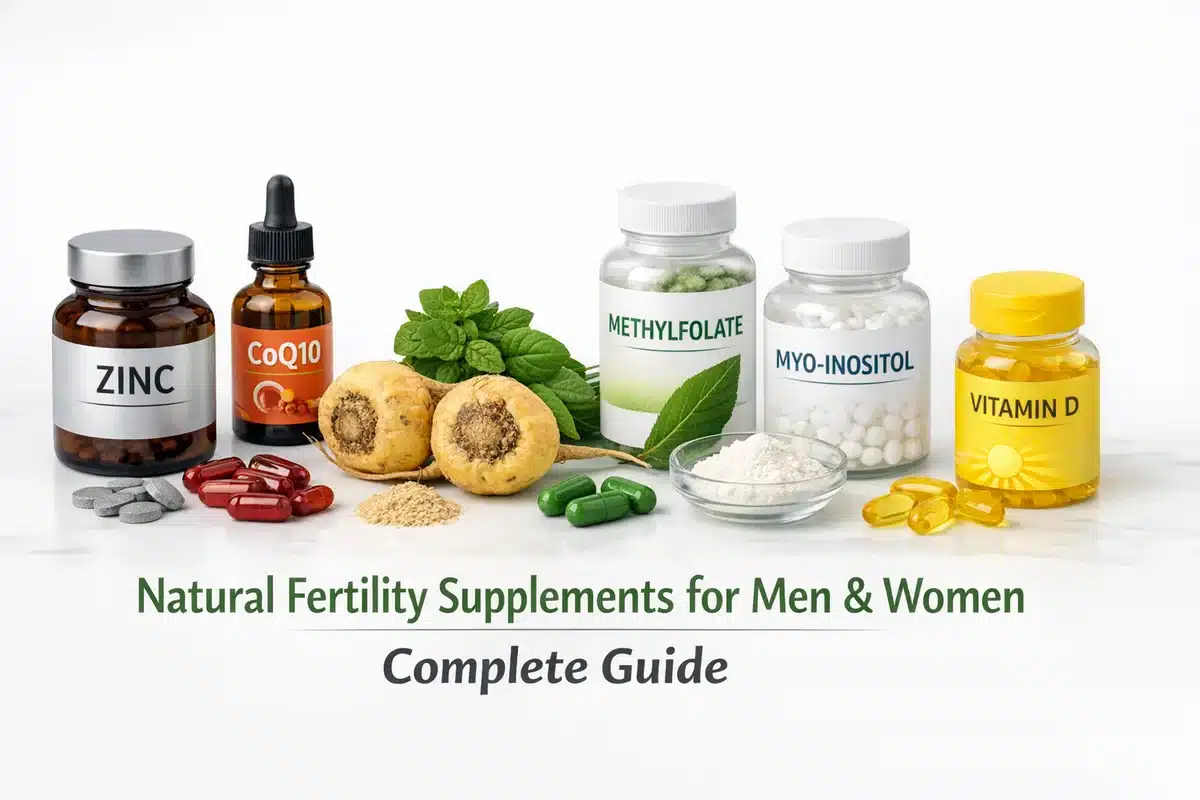
Important: What This Article Does Not Do
This article is for educational purposes only. It does not provide medical advice and does not recommend any supplement as a treatment, cure, or prevention for any medical condition. The information here is intended to support — not replace — the guidance of a qualified healthcare professional. This article does not diagnose, treat, or cure infertility or any fertility-related condition. If you are experiencing difficulty conceiving, always consult a licensed fertility specialist or gynaecologist before beginning any supplement regimen.
What You’ll Learn in This Article
Why Fertility Supplements Work for Some Couples and Not Others
Fertility challenges affect approximately one in six couples worldwide — and in nearly half of all cases, a male-factor contribution is identified, yet most conversations about fertility supplements focus almost entirely on women. [WHO, 2023] This imbalance leads couples down expensive, incomplete paths that delay real progress.
Quick answer: Natural fertility supplements support egg quality, sperm health, and hormonal balance — but only when matched to the correct underlying issue. The right supplement depends on your age, diagnosis, and whether the challenge is female-factor, male-factor, or both. Taking the wrong supplement for the wrong reason produces no meaningful benefit regardless of dose or brand.
When to seek a medical evaluation: Couples under 35 who have not conceived after 12 months of regular unprotected intercourse should request a fertility workup. Women over 35 should seek evaluation after 6 months. Anyone with known cycle irregularity, a history of pelvic infection, or a previous pregnancy loss should not wait — earlier investigation is appropriate regardless of age. A basic workup includes a hormonal blood panel and AMH test for women, and a semen analysis for male partners. Without this baseline, supplementation is guesswork.
Key Takeaways
- Male-factor infertility contributes to up to 50% of cases globally. Both partners should be evaluated and supported simultaneously — single-partner supplementation is an incomplete strategy. [WHO, 2023]
- The most evidence-supported nutrients for female fertility are methylfolate (5-MTHF), CoQ10 (ubiquinol), vitamin D3, myo-inositol, and iron — each working through a distinct biological mechanism.
- For male fertility, zinc, selenium, L-carnitine, CoQ10, and lycopene show the most consistent support for sperm quality. Sperm development takes 72–90 days — a minimum of three months of consistent supplementation is required before outcomes can be assessed. [Agarwal et al., 2021]
- The most common reason fertility supplements fail is incorrect root-cause identification: supplementing for the wrong factor produces no benefit regardless of product quality or brand.
- Cortisol directly suppresses LH, FSH, and testosterone in both sexes. Chronic stress is a physiological barrier that stops supplements from working effectively even when they are correctly chosen. [Joseph et al., 2019]
Understanding the Problem: Why Fertility Is Harder for Some Couples
Most couples who struggle to conceive are not clinically infertile — they are subfertile, meaning conception is possible but is taking longer than expected due to one or more modifiable factors. [Gnoth et al., 2005] Identifying which factor is involved is the most important step before any supplement is considered.
In women, the most common modifiable contributors include ovulatory dysfunction (up to 40% of female-factor cases), diminished ovarian reserve, uterine lining quality, thyroid dysfunction, and PCOS — which affects 8–13% of women of reproductive age globally and is the leading cause of anovulatory infertility. [Balen et al., 2016] In men, the most frequently identified issues are low sperm count (oligospermia), reduced motility (asthenospermia), and abnormal morphology (teratospermia), most commonly caused by oxidative stress, nutritional deficiency, heat exposure, and lifestyle factors. [Agarwal et al., 2021]
Female fertility begins to decline measurably after age 32, and more steeply after 37 — not primarily because of egg quantity but because of egg quality. The mitochondrial energy available to support correct cell division during fertilisation diminishes with age. [Bentov & Casper, 2013] For men, fertility declines more gradually; the more significant concern is sperm DNA fragmentation, which increases progressively and is independently linked to higher miscarriage rates regardless of sperm count or motility. [Robinson et al., 2012]
The Most Important Misconception About Fertility Supplements
Fertility supplements work by removing nutritional and oxidative barriers to existing fertility potential — they do not create new fertility. Sperm complete their full development cycle in 72–90 days; egg quality improvements through CoQ10 operate over a similar timeframe. Couples who assess results at four to six weeks are evaluating the intervention before the biology has had time to respond.
A pattern seen consistently in fertility supplement consultations is that female partners (typically aged 28–40) are far more proactive in seeking support, while male partners often delay or assume the challenge is female-only. Global clinical data confirms this precisely: in a review of 12,000 infertile couples, male-factor issues were present in approximately 50% of cases, yet male partners were investigated first in fewer than 30% of cases. [Thonneau et al., 1991] Many couples spend months optimising female nutrition while a concurrent male-factor issue goes entirely unaddressed.
What Natural Fertility Supplements Cannot Do
Building accurate expectations is as important as understanding the evidence for supplementation. These limitations are absolute.
- Cannot unblock fallopian tubes. Tubal occlusion — from endometriosis, pelvic inflammatory disease, or adhesions — is structural and requires surgical or assisted reproductive intervention. No nutrient or herbal compound reverses scar tissue.
- Cannot replace medical diagnosis. Supplementing without knowing your specific fertility picture means targeting factors you may not have while a different condition goes unaddressed.
- Cannot create sperm where production is absent. Azoospermia due to genetic or structural causes requires specialist andrological assessment, not nutritional supplementation.
- Cannot work without ovulation. If a woman is not ovulating due to hypothalamic amenorrhoea, premature ovarian insufficiency, or pituitary dysfunction, ovulatory-support supplements have no ovulation to support. Clinical management comes first.
- Cannot compensate for an uncorrected lifestyle environment. Active heavy smoking, excessive alcohol, untreated obesity, and chronic sleep deprivation create oxidative and hormonal conditions that consistently overcome any nutritional benefit from supplements.
Natural Ways to Support Fertility Before Supplements
The most evidence-supported first steps involve lifestyle normalisation and targeted dietary improvement — both of which directly affect hormonal signalling, egg quality, and sperm health.
Lifestyle Priorities
- Body weight regulation — In women, a BMI below 18.5 or above 27 disrupts ovulation. In men, obesity reduces testosterone and raises scrotal temperature, impairing sperm independently. [Rich-Edwards et al., 2002]
- Sleep (7–9 hours) — Deep sleep governs pulsatile GnRH release, which drives the entire hormonal cascade for both ovulation and testosterone production. Just one week of sleep restriction measurably suppresses testosterone in men. [Leproult & Van Cauter, 2011]
- Stress reduction — Cortisol competes with progesterone for receptor binding and suppresses LH pulses. Mindfulness-based stress reduction (MBSR) has shown measurable improvements in fertility-relevant hormones in randomised controlled trials. [Domar et al., 2011]
- Eliminate tobacco — Smoking accelerates ovarian ageing; a pack-a-day smoker typically has an ovarian reserve consistent with someone approximately ten years older. In men, tobacco is among the most consistently demonstrated causes of elevated sperm DNA fragmentation. [Freour et al., 2010]
- Reduce alcohol — Even moderate alcohol intake (3–6 units per week) is associated with reduced fecundability in women. [Jensen et al., 1998]
Dietary Priorities
A Mediterranean-style dietary pattern — high in vegetables, legumes, whole grains, oily fish, and olive oil — has the strongest observational evidence for fertility support in both sexes. [Gaskins & Chavarro, 2018] Key dietary priorities include foods rich in folate (dark leafy greens, lentils, chickpeas), zinc (pumpkin seeds, beef, oysters), omega-3 fatty acids (oily fish, walnuts, flaxseed), and vitamin D (oily fish, egg yolks, sunlight). Processed foods, trans fats, and high-glycaemic carbohydrates are associated with worse fertility outcomes, particularly in women with PCOS. [Chavarro et al., 2007]
When Diet Is Not Enough: Supplements as a Bridge
When dietary sources are insufficient — common given the micronutrient demands of pre-conception preparation — supplements bridge the gap. The most researched fertility-relevant nutrients are methylfolate, CoQ10 (ubiquinol), zinc, selenium, myo-inositol, vitamin D3, L-carnitine, and lycopene, each addressing a distinct biological mechanism.
The Science Behind Key Fertility Nutrients
For Women
- Methylfolate (5-MTHF) — Supports healthy cell division during the earliest stages of embryo development and reduces neural tube defect risk. [Czeizel & Dudás, 1992] Up to 60% of people carry MTHFR variants that impair conversion of standard folic acid to its active form — for these individuals, methylfolate is significantly more effective. [Greenberg et al., 2011]
- CoQ10 (Ubiquinol) — The mitochondria’s primary energy currency. Egg cells require enormous mitochondrial energy to complete meiosis correctly; errors here are the leading cause of chromosomally abnormal embryos and miscarriage. CoQ10 levels decline with age. Supplementation in women over 35 has shown improvements in egg quality markers in randomised controlled trials, with commonly studied ranges of 200–600mg daily. [Bentov et al., 2014] Ubiquinol is significantly better absorbed than ubiquinone, particularly in adults over 35.
- Myo-Inositol — Particularly relevant for women with PCOS or insulin resistance. Improves insulin receptor sensitivity and restores ovulatory cycles. A meta-analysis of 13 RCTs found myo-inositol significantly improved hormonal profiles and clinical pregnancy rates in women with PCOS, at commonly studied ranges of 2–4g daily. [Unfer et al., 2017] The combination with D-chiro-inositol at a 40:1 ratio mirrors the natural physiological ratio. [Monastra et al., 2017]
- Vitamin D3 — Functions as a steroid hormone precursor with receptors throughout the reproductive system. Deficiency — affecting approximately 40% of adults globally — is associated with lower implantation rates, reduced AMH levels, and impaired progesterone production. [Lerchbaum & Obermayer-Pietsch, 2012] Blood testing is recommended before supplementing.
- Iron (bisglycinate form) — Women with non-haem iron deficiency, even without clinical anaemia, show higher rates of ovulatory dysfunction. [Chavarro et al., 2006] Bisglycinate is better absorbed and better tolerated than ferrous sulphate.
Browse the fertility support supplement range or explore hormonal balance support options for PCOS, irregular cycles, and progesterone-oestrogen balance.

For Men
- Zinc — Essential for testosterone synthesis, sperm production, and sperm DNA structural integrity. Deficiency is one of the most consistently demonstrated nutritional causes of male subfertility. Zinc picolinate and citrate are significantly better absorbed than zinc oxide. [Fallah et al., 2018]
- Selenium — A component of the antioxidant enzyme glutathione peroxidase, protecting developing sperm from oxidative damage during spermatogenesis. Associated with reduced sperm motility, abnormal morphology, and increased DNA fragmentation when deficient. [Scott et al., 1998]
- L-Carnitine — Provides energy to sperm cells via beta-oxidation of fatty acids in the sperm midpiece. Low epididymal carnitine levels are strongly correlated with poor motility (asthenospermia). Multiple RCTs show consistent improvements in motility parameters. [Lenzi et al., 2003]
- Lycopene — A lipid-soluble antioxidant that concentrates specifically in testicular tissue. A systematic review found lycopene supplementation associated with improved sperm concentration and motility. [Durairajanayagam et al., 2014]
- CoQ10 — Sperm motility depends on mitochondrial ATP production in the sperm midpiece. Supplementation has shown improvements in motility in men with idiopathic asthenospermia in research settings. [Balercia et al., 2009]
- Folate and B12 — Folate supports sperm DNA methylation and reducing DNA fragmentation; B12 supports sperm count and motility. Both are frequently under-supplemented in male fertility protocols. [Boxmeer et al., 2009]
Explore the full men’s health and fertility supplement range, including targeted options for sperm count, motility, and DNA integrity support.
Best Fertility Supplements by Age Group
In Your 20s: Foundation First
Ovarian reserve is highest and egg quality concerns are lowest in this decade. Priority is a strong nutritional foundation: methylfolate, vitamin D, and iron for women; zinc, selenium, and vitamin D for men. Couples under 35 who have not conceived after 12 months of regular unprotected intercourse should request investigation regardless of age. Nutritional deficiencies in this group most commonly include vitamin D (globally prevalent), iron (women), and zinc (men with low dietary animal protein intake).
In Your Early-to-Mid 30s: Optimisation
Egg quality begins its measurable decline in the early 30s. CoQ10 (ubiquinol) becomes a meaningful addition in this decade — not because deficiency is guaranteed, but because the mitochondrial energy demands of meiosis increase as cellular energy production efficiency decreases with age. [Bentov & Casper, 2013] Women with PCOS, irregular cycles, or previous pregnancy loss should prioritise myo-inositol alongside methylfolate. Male priorities remain zinc, selenium, and antioxidant support, but consistency over the full 90-day spermatogenesis window becomes increasingly important.
Women Over 35: Targeted Egg Quality Support
After 35, egg quality is the primary fertility variable. CoQ10 (ubiquinol) at ranges commonly used in research settings is the most evidence-supported intervention for this age group. [Bentov et al., 2014] Vitamin D status is especially important — emerging evidence links lower 25-OH-D levels with reduced pregnancy rates in women over 35 undergoing fertility treatment. [Lerchbaum & Obermayer-Pietsch, 2012] Melatonin at low doses is being studied for its antioxidant role in follicular fluid — preliminary evidence suggests benefit for egg quality in this group, though this research is still developing and should be discussed with a clinician before use.
Women Over 40: Medical Partnership Essential
Natural conception after 40 is achievable but requires thorough medical evaluation alongside any supplement programme. Supplement support follows the same priorities as the 35+ group — CoQ10, methylfolate, vitamin D, and broad antioxidant support at ranges commonly studied in this context — but medical partnership is more important here than at any earlier age. An AMH test and antral follicle count provide objective ovarian reserve data that should inform decisions about natural conception versus assisted reproduction. Women over 40 should seek evaluation without waiting for a 12-month trial period.
Best Fertility Supplements by Condition
PCOS
The primary evidence-based intervention is myo-inositol, at ranges of 2–4g daily commonly used in research settings, which improves insulin receptor sensitivity and restores ovulatory cycles. [Unfer et al., 2017] The 40:1 combination with D-chiro-inositol mirrors the natural physiological ratio and has shown the best results for cycle regularity and hormonal normalisation. [Monastra et al., 2017] Supporting nutrients: methylfolate, vitamin D3 (frequently deficient in PCOS, and correcting it improves insulin sensitivity), magnesium glycinate (associated with reduced insulin resistance and improved sleep quality), and omega-3 fatty acids (EPA/DHA, associated with reduced androgen levels and improved cycle regularity in PCOS). [Khani et al., 2017]
Low Sperm Count (Oligospermia)
The supplement priority is reducing oxidative damage to developing sperm. Research protocols for male antioxidant support have commonly studied combinations including CoQ10, zinc, selenium, vitamin C, and vitamin E — at ranges referenced in the clinical literature. [Agarwal et al., 2021] L-carnitine is particularly relevant when poor motility accompanies low count. Lifestyle elimination of heat exposure, alcohol, and tobacco must run concurrently for supplementation to have meaningful impact.
Unexplained Infertility
“Unexplained infertility” means standard diagnostic tests have not identified a cause — not that no cause exists. A broad nutritional optimisation approach is most appropriate: methylfolate, CoQ10 (ubiquinol), vitamin D3, zinc (male partner), selenium, and myo-inositol (female partner, if any cycle irregularity exists). Subclinical male-factor contributions are frequently missed on standard semen analysis but can be identified through sperm DNA fragmentation testing, which is not routinely performed in many clinical settings. Both partners should optimise nutritional status together.
Before IVF
IVF success rates are directly linked to egg quality (women) and sperm DNA integrity (men) — both are amenable to nutritional optimisation, but the 90-day cellular development window means preparation must begin at least three months before egg retrieval. For women: CoQ10 (ubiquinol, at ranges commonly used in research settings), methylfolate, vitamin D3, and a high-quality prenatal. For men: zinc, selenium, L-carnitine, and CoQ10, targeting sperm DNA fragmentation rate. [Robinson et al., 2012] Always disclose all supplements to your IVF clinic, as some may need to be paused around egg retrieval.
Supplement Stack Examples: What to Actually Take
The most common question is not “what does this nutrient do?” — it is “what exactly should I take?” The following are starting frameworks built from the research evidence. Individual adjustments based on test results and diagnosis are always preferable to generic stacks.
| Stack | Who It Is For | Core Nutrients | Minimum Duration |
|---|---|---|---|
| Beginner Couple | Couples in their 20s–early 30s, no specific diagnosis, trying under 6 months | Female: Methylfolate, Vitamin D3, Iron bisglycinate, Omega-3 Male: Zinc, Selenium, Vitamin D3, Omega-3 | 3 months |
| PCOS-Focused (Female) | Women with PCOS, insulin resistance, or irregular cycles | Myo-Inositol + D-chiro-Inositol (40:1), Methylfolate, Vitamin D3, Magnesium glycinate, Omega-3 | 3–4 months |
| Advanced Egg Quality (35+) | Women over 35, diminished reserve, previous IVF failures, recurrent miscarriage | CoQ10 ubiquinol (research-range dose), Methylfolate, Vitamin D3, Iron bisglycinate, Prenatal, Omega-3 | 3–4 months |
| Male Sperm Quality | Men with low count, poor motility, high DNA fragmentation, or unexplained subfertility | Zinc picolinate, Selenium, CoQ10, L-Carnitine, Lycopene, Vitamin C, Vitamin E | 3 months (one spermatogenesis cycle) |
| IVF Preparation | Couples preparing for IVF/ICSI — begin minimum 3 months before egg retrieval | Female: CoQ10 ubiquinol, Methylfolate, Vitamin D3, Prenatal, Omega-3 Male: Zinc, Selenium, CoQ10, L-Carnitine, Folate | 3 months before retrieval — pause high-dose antioxidants as advised by clinic |
Important: These stacks are educational frameworks. Always confirm appropriateness with a qualified healthcare professional based on your individual test results and medical history. Use the Supplement Finder to identify specific products matching your situation.
How Long Do Fertility Supplements Take to Work?
Timeline expectations are the most misunderstood aspect of fertility supplementation. Most couples stop too early or draw conclusions too quickly.
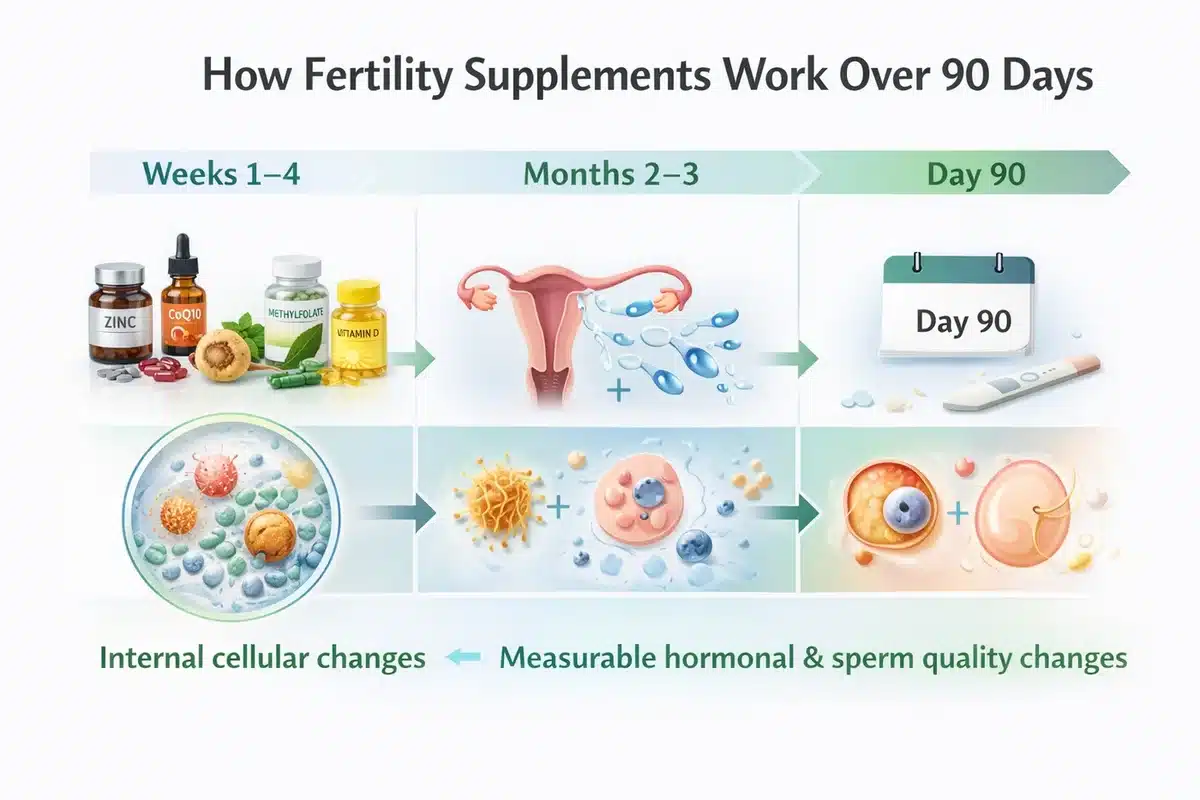
| Timeframe | What Is Happening Internally | What You May Notice | Clinical Significance |
|---|---|---|---|
| Weeks 1–4 | Nutrient levels rising in blood and tissues. Cellular uptake begins. Antioxidant enzyme activity increasing. No structural changes yet. | Possibly: improved energy (iron/B12 deficiency corrected), better sleep (magnesium). No fertility-specific changes yet. | Too early to assess fertility outcomes. Essential groundwork phase. |
| Months 1–2 | Mitochondrial function beginning to improve (CoQ10). Hormonal signalling improving as deficits are corrected. Sperm cells now developing benefit from improved nutrient environment. | Possibly: more regular cycles (myo-inositol in PCOS), improved cycle tracking data. Sperm now maturing will reflect current nutrition by month 3. | Hormonal markers may begin showing measurable improvement. Not yet a complete assessment window. |
| Months 2–3 | First complete spermatogenesis cycle completes (72–90 days). For women: follicles recruited in the next 1–2 cycles have matured during this window. | Men: repeat semen analysis at this point may show measurable improvement. Women: improved cycle regularity, ovulation confirmation, improved cervical mucus quality. | Earliest meaningful assessment window. Semen analysis before this point reflects pre-supplementation conditions. |
| Months 3–6 | Cumulative benefits compound. Multiple egg recruitment cycles have occurred under improved nutritional conditions. | Pregnancy outcomes become assessable. IVF outcomes can now be meaningfully linked to the supplementation period. | Primary outcome window. If no improvement by 6 months, review diagnosis, dosage, and compliance before concluding inefficacy. |
The most important rule: Do not reassess or abandon a fertility supplement protocol before the three-month mark. Earlier assessment does not measure the effect of supplementation — it measures your nutritional status before supplementation reached the cells that matter.
What to Look for When Buying Fertility Supplements
Form Matters More Than Dose
The specific compound determines bioavailability — and the cheapest form is frequently the worst absorbed. Key form differences:
| Nutrient | Common Form | Preferred Form | Why It Matters |
|---|---|---|---|
| Folate | Folic acid | 5-MTHF (methylfolate) | Up to 60% of people carry MTHFR variants impairing folic acid conversion |
| CoQ10 | Ubiquinone | Ubiquinol | Active reduced form — significantly better absorbed over age 35 |
| Magnesium | Magnesium oxide | Glycinate or malate | Oxide has under 4% bioavailability; glycinate absorbs far more efficiently |
| Iron | Ferrous sulphate | Iron bisglycinate | Less constipation, better absorbed — especially with vitamin C |
| Zinc | Zinc oxide | Picolinate or citrate | Picolinate and citrate have meaningfully superior absorption |
| Vitamin D | Ergocalciferol (D2) | Cholecalciferol (D3) with K2 | D3 raises serum 25-OH-D more effectively; K2 supports correct calcium metabolism |
Quality Certifications
GMP certification (Good Manufacturing Practice) is the baseline quality standard across all major markets — equivalent standards are applied by the FDA (USA), the EU GMP Directive, the MHRA (UK), Health Canada, and the TGA (Australia). Third-party testing — NSF International, Informed Sport, or USP verification — provides independent confirmation of ingredient accuracy and product purity. This is especially important for pre-conception use where product quality matters most.
Recs-Medix sources its supplement range directly from GMP-certified international manufacturers, with international shipping via DHL Express.
Combination Formulas vs Individual Nutrients
- Combination fertility formulas offer convenience and comprehensive coverage — well suited to couples wanting a broad baseline without managing multiple separate supplements.
- Individual nutrients offer precision — if your specific need is high-dose CoQ10 for egg quality, a standard prenatal will not provide the dose ranges used in the research.
- Best approach for most couples: a high-quality couple-oriented prenatal baseline plus targeted individual additions based on specific diagnosis or age-related priority.
Explore fertility support options at Recs-Medix fertility support or use the Supplement Finder to identify products matched to your specific situation.
Before You Buy: The Six-Point Fertility Supplement Checklist
- Have both partners had a basic fertility workup? Supplements targeted at the wrong factor produce no result. A hormonal panel, AMH test, and semen analysis are the minimum diagnostic baseline before targeted supplementation.
- Have you checked the nutrient form on the label? The form (methylfolate vs folic acid; ubiquinol vs ubiquinone) determines bioavailability. If the label does not specify the compound form, look for a product that does.
- Is the dose consistent with research protocols? Many combination formulas contain impressive ingredient lists at doses far below those used in clinical trials. Cross-reference the dose on the label with the doses cited in this guide.
- Is the product GMP-certified and/or third-party tested? Look for NSF, USP, Informed Sport, or GMP certification marks. Pre-conception supplementation warrants the highest available product quality standard.
- Are you committed to a minimum of three months? A fertility supplement protocol is a biological investment, not a quick fix. Set a repeat assessment date before you begin — and do not evaluate outcomes before the three-month mark.
- Does your partner have a plan too? Male-factor issues contribute to approximately 50% of fertility challenges. Both partners supplementing simultaneously addresses both sides of the equation. Single-partner supplementation is almost always an incomplete strategy.
Who Should Speak to a Doctor Before Taking Fertility Supplements?
- Pregnant or breastfeeding women — Supplement requirements shift significantly during pregnancy. High-dose vitamin A, iodine, and several herbal compounds can be harmful. Always review your full supplement list with your midwife or obstetrician.
- People taking prescription medication — CoQ10 has a mild blood-pressure-lowering effect relevant to those on antihypertensives. High-dose folate can mask vitamin B12 deficiency. Iron supplements must be taken at least four hours apart from thyroid medication to avoid absorption interference.
- People with diagnosed chronic health conditions — PCOS, endometriosis, thyroid disease, diabetes, kidney disease, and autoimmune conditions all affect fertility through distinct mechanisms. Supplementing without addressing the underlying condition is unlikely to produce results.
- Children and adolescents under 18 — Fertility supplementation is not appropriate for this age group without explicit medical supervision.
- People currently undergoing assisted reproduction (IVF/IUI) — Always disclose all supplements to your fertility clinic before and during a treatment cycle.
- People with hormone-sensitive conditions — Supplements including maca, DIM, and black cohosh influence hormonal pathways and require specialist clearance for individuals with oestrogen-sensitive conditions.
Visit our supplement FAQ page, the supplement glossary, or use our ovulation calculator to support your planning.
Evidence & Sources
- Agarwal, A., Baskaran, S., Parekh, N., et al. (2021). Male infertility. The Lancet, 397(10271), 319–333. https://doi.org/10.1016/S0140-6736(20)32667-2
- Balercia, G., Buldreghini, E., Vignini, A., et al. (2009). Coenzyme Q10 treatment in infertile men with idiopathic asthenozoospermia. Fertility and Sterility, 91(5), 1785–1792. https://doi.org/10.1016/j.fertnstert.2008.02.155
- Balen, A. H., Morley, L. C., Misso, M., et al. (2016). The management of anovulatory infertility in women with polycystic ovary syndrome. Human Reproduction Update, 22(6), 687–708. https://doi.org/10.1093/humupd/dmw025
- Bentov, Y., & Casper, R. F. (2013). The aging oocyte — can mitochondrial function be improved? Fertility and Sterility, 99(1), 18–22. https://doi.org/10.1016/j.fertnstert.2012.11.031
- Bentov, Y., Hannam, T., Jurisicova, A., Esfandiari, N., & Casper, R. F. (2014). Coenzyme Q10 supplementation and oocyte aneuploidy in women undergoing IVF–ICSI treatment. Clinical Medicine Insights: Reproductive Health, 8, 31–36. https://doi.org/10.4137/CMRH.S14681
- Boxmeer, J. C., Macklon, N. S., Lindemans, J., et al. (2009). IVF outcomes are associated with biomarkers of the homocysteine pathway in monofollicular fluid. Human Reproduction, 24(5), 1059–1066. https://doi.org/10.1093/humrep/dep009
- Chavarro, J. E., Rich-Edwards, J. W., Rosner, B. A., & Willett, W. C. (2006). Iron intake and risk of ovulatory infertility. Obstetrics & Gynecology, 108(5), 1145–1152. https://doi.org/10.1097/01.AOG.0000238333.37423.ab
- Chavarro, J. E., Rich-Edwards, J. W., Rosner, B. A., & Willett, W. C. (2007). Diet and lifestyle in the prevention of ovulatory disorder infertility. Obstetrics & Gynecology, 110(5), 1050–1058. https://doi.org/10.1097/01.AOG.0000287293.25465.e1
- Czeizel, A. E., & Dudás, I. (1992). Prevention of the first occurrence of neural-tube defects by periconceptional vitamin supplementation. New England Journal of Medicine, 327(26), 1832–1835. https://doi.org/10.1056/NEJM199212243272602
- Domar, A. D., Rooney, K. L., Wiegand, B., et al. (2011). Impact of a group mind/body intervention on pregnancy rates in IVF patients. Fertility and Sterility, 95(7), 2269–2273. https://doi.org/10.1016/j.fertnstert.2011.03.046
- Durairajanayagam, D., Agarwal, A., Ong, C., & Prashast, P. (2014). Lycopene and male infertility. Asian Journal of Andrology, 16(3), 420–425. https://doi.org/10.4103/1008-682X.126384
- Fallah, A., Mohammad-Hasani, A., & Colagar, A. H. (2018). Zinc is an essential element for male fertility. Journal of Reproduction & Infertility, 19(2), 69–81. https://www.ncbi.nlm.nih.gov/pmc/articles/PMC6010824/
- Freour, T., Masson, D., Mirallie, S., et al. (2010). Active smoking compromises IVF outcome and affects ovarian reserve. Reproductive BioMedicine Online, 13(1), 96–102. https://doi.org/10.1016/S1472-6483(10)60503-2
- Gaskins, A. J., & Chavarro, J. E. (2018). Diet and fertility: a review. American Journal of Obstetrics and Gynecology, 218(4), 379–389. https://doi.org/10.1016/j.ajog.2017.08.010
- Gnoth, C., Godehardt, E., Frank-Herrmann, P., et al. (2005). Definition and prevalence of subfertility and infertility. Human Reproduction, 20(5), 1144–1147. https://doi.org/10.1093/humrep/deh870
- Greenberg, J. A., Bell, S. J., Guan, Y., & Yu, Y. H. (2011). Folic acid supplementation and pregnancy: more than just neural tube defect prevention. Reviews in Obstetrics & Gynecology, 4(2), 52–59. https://www.ncbi.nlm.nih.gov/pmc/articles/PMC3218540/
- Jensen, T. K., Hjollund, N. H., Henriksen, T. B., et al. (1998). Does moderate alcohol consumption affect fertility? BMJ, 317(7157), 505–510. https://doi.org/10.1136/bmj.317.7157.505
- Joseph, D. N., & Whirledge, S. (2019). Stress and the HPA axis: balancing homeostasis and fertility. International Journal of Molecular Sciences, 20(20), 4729. https://doi.org/10.3390/ijms20204729
- Khani, B., Mardanian, F., & Fesharaki, S. J. (2017). Omega-3 supplementation effects on polycystic ovary syndrome symptoms and metabolic syndrome. Journal of Research in Medical Sciences, 22(1), 64. https://doi.org/10.4103/jrms.JRMS_644_16
- Lenzi, A., Sgrò, P., Salacone, P., et al. (2003). A placebo-controlled double-blind randomised trial of the use of combined L-carnitine and L-acetyl-carnitine treatment in men with asthenozoospermia. Fertility and Sterility, 79(2), 292–300. https://doi.org/10.1016/s0015-0282(02)04679-5
- Leproult, R., & Van Cauter, E. (2011). Effect of 1 week of sleep restriction on testosterone levels in young healthy men. JAMA, 305(21), 2173–2174. https://doi.org/10.1001/jama.2011.710
- Lerchbaum, E., & Obermayer-Pietsch, B. (2012). Vitamin D and fertility: a systematic review. European Journal of Endocrinology, 166(5), 765–778. https://doi.org/10.1530/EJE-11-0984
- Monastra, G., Unfer, V., Harrath, A. H., & Bizzarri, M. (2017). Combining treatment with myo-inositol and D-chiro-inositol (40:1) is effective in restoring ovary function and metabolic balance in PCOS patients. Gynecological Endocrinology, 33(1), 1–9. https://doi.org/10.1080/09513590.2016.1247797
- Rich-Edwards, J. W., Spiegelman, D., Garland, M., et al. (2002). Physical activity, body mass index, and ovulatory disorder infertility. Epidemiology, 13(2), 184–190. https://doi.org/10.1097/00001648-200203000-00013
- Robinson, L., Gallos, I. D., Conner, S. J., et al. (2012). The effect of sperm DNA fragmentation on miscarriage rates. Human Reproduction, 27(10), 2908–2917. https://doi.org/10.1093/humrep/des261
- Scott, R., MacPherson, A., Yates, R. W., Hussain, B., & Dixon, J. (1998). The effect of oral selenium supplementation on human sperm motility. British Journal of Urology, 82(1), 76–80. https://doi.org/10.1046/j.1464-410x.1998.00683.x
- Thonneau, P., Marchand, S., Tallec, A., et al. (1991). Incidence and main causes of infertility in a resident population of three French regions. Human Reproduction, 6(6), 811–816. https://doi.org/10.1093/oxfordjournals.humrep.a137433
- Unfer, V., Facchinetti, F., Orrù, B., Giordani, B., & Nestler, J. (2017). Myo-inositol effects in women with PCOS: a meta-analysis of randomised controlled trials. Endocrine Connections, 6(8), 647–658. https://doi.org/10.1530/EC-17-0243
- World Health Organization. (2023). Infertility prevalence estimates, 1990–2021. WHO. https://www.who.int/publications/i/item/9789240068131
- Zeisel, S. H. (2006). Choline: critical role during fetal development and dietary requirements in adults. Annual Review of Nutrition, 26, 229–250. https://doi.org/10.1146/annurev.nutr.26.061505.111156
Frequently Asked Questions
What is the best natural supplement to get pregnant?
The most effective supplement depends on which factor is limiting your fertility. For most women preparing for conception, methylfolate (5-MTHF) is the highest priority — it supports correct embryo cell division regardless of age or diagnosis. For women over 35 or those with poor egg quality indicators, CoQ10 in ubiquinol form at ranges studied in clinical research has the strongest evidence. For women with PCOS, myo-inositol has been shown in multiple RCTs to restore ovulatory function. A fertility-focused blood panel identifying vitamin D, iron, thyroid function, and hormonal markers will reveal your specific gaps and make the decision much clearer. [Chavarro et al., 2006; Bentov et al., 2014; Unfer et al., 2017]
How can I increase my fertility naturally?
Address lifestyle foundations first: healthy body weight, seven to nine hours of sleep, chronic stress reduction, eliminating tobacco, moderating alcohol, and following a Mediterranean-style diet collectively address the most common modifiable fertility barriers and create the biological conditions in which supplements work most effectively. Supplements correct deficiencies and reduce oxidative damage — but in a poor biological environment, adding nutrients produces limited benefit. The combination of lifestyle optimisation plus targeted supplementation based on your specific test results consistently outperforms supplementation alone. [Rich-Edwards et al., 2002; Chavarro et al., 2007]
Can high cortisol cause infertility?
Yes. Elevated cortisol directly impairs reproductive function in both sexes through measurable hormonal mechanisms. In women, cortisol competes with progesterone for shared receptor binding and suppresses the LH secretion that triggers ovulation — producing anovulatory cycles or an insufficient luteal phase that impairs implantation. In men, cortisol suppresses hypothalamic GnRH release, reducing testosterone synthesis and sperm production downstream. Stress management is a physiological requirement, not a lifestyle suggestion — particularly for couples who have already addressed nutritional and medical factors without achieving conception. [Joseph et al., 2019]
At what age are 90% of your eggs gone?
Research modelling suggests women lose approximately 90% of their original follicle reserve by around age 30 — but this is widely misunderstood. Egg quantity and egg quality are different measures. Natural fertility is primarily limited by egg quality in women over 35, not by absolute numbers running out. Most women retain sufficient eggs for natural conception well into their late 30s. The more clinically significant concern is the increasing rate of chromosomal errors (aneuploidy) in eggs as mitochondrial function declines — which is exactly why CoQ10 has attracted research interest for this age group. [Bentov & Casper, 2013] An AMH blood test and antral follicle count give far more useful information than age alone.
Can I take fertility supplements every day?
Yes — most fertility supplements are designed for daily use and most effective when taken consistently for a minimum of three months. The biological mechanisms they support (mitochondrial energy, antioxidant protection, hormonal signalling) operate on continuous cellular cycles requiring sustained nutrient availability. Fat-soluble supplements (CoQ10, vitamin D, omega-3) should be taken with a meal containing dietary fat to maximise absorption. Water-soluble supplements (methylfolate, vitamin C, B vitamins) are best taken with food to minimise gastrointestinal discomfort. There is no benefit to taking breaks mid-protocol unless advised by a healthcare provider.
Can men and women take fertility supplements together?
Yes — and simultaneous supplementation by both partners is strongly recommended. Since male-factor contributions are involved in up to 50% of fertility challenges, both partners supplementing together addresses both sides of the biological equation at the same time. Many supplement providers offer paired couple programmes — a female-focused formula alongside a male-focused one — designed for concurrent use. [Agarwal et al., 2021; WHO, 2023]
Do fertility supplements really work?
For couples with identified nutritional deficiencies or specific modifiable fertility factors, evidence-based fertility supplements have demonstrated measurable benefits in peer-reviewed clinical trials — including improved sperm count, motility, and DNA fragmentation in men, and improved ovulatory cycle regularity, egg quality markers, and clinical pregnancy rates in women. [Agarwal et al., 2021; Unfer et al., 2017; Bentov et al., 2014] The critical qualifier is correct matching to the underlying issue: a supplement targeting the wrong factor will not produce results. Supplements are not a substitute for medical diagnosis and cannot resolve structural or genetic causes of infertility. When correctly chosen, dosed, and used for the full minimum duration, the evidence supports their role as a meaningful component of fertility optimisation.
Should I take choline during IVF?
Choline is an increasingly recognised pre-conception nutrient that most prenatal vitamins under-supply. It is required for cell membrane formation, foetal brain development, and the structural integrity of egg cells and early embryos. Adequate intake for women is 425mg daily, rising to 450–550mg during pregnancy, but most people consuming Western diets obtain significantly less. [Zeisel, 2006] Choline supplementation is not contraindicated during IVF preparation, but the specific evidence base for IVF outcomes is still developing. Always disclose your complete supplement list to your clinic at the start of treatment.
What can I drink to support fertility naturally?
No beverage independently improves conception rates, but several dietary liquids support the conditions fertility depends on. Green tea (1–2 cups daily) provides EGCG, a potent antioxidant associated with reduced oxidative stress in reproductive tissue. Adequate plain water (at least 1.5–2 litres daily) is essential for cervical mucus quality, which directly affects sperm transport. What to avoid is clearer than what to add: regular alcohol is associated with reduced fecundability; high-sugar drinks worsen the insulin spikes that drive PCOS-related ovulatory dysfunction; and caffeine above 200–300mg daily is associated with modestly reduced fertility in women. [Jensen et al., 1998; Chavarro et al., 2007]
Ready to Find the Right Supplement for Your Situation?
The most effective starting point is always understanding your specific fertility picture first. Use our ovulation calculator to map your cycle, browse the fertility support supplement range or the men’s health range, and use the Supplement Finder to identify products matched to your age, condition, and goal. For condition-specific guidance, visit the health conditions guide.
This article was written in April 2026 and reflects peer-reviewed research current at that date. It is scheduled for quarterly review — next update: July 2026.
Individual results may vary. The information in this article is for educational purposes only and does not constitute medical advice. Always consult a qualified healthcare professional before beginning any supplement regimen.