
Knowing how to choose safe herbal supplements online protects both your health and your money. Regulatory oversight for herbal products remains inconsistent across markets — and as the World Health Organisation has documented, poor quality control and contamination in herbal medicines are recognised contributors to adverse consumer outcomes. Whether you are ordering from the US, UK, Canada, Australia, or internationally, the steps you take before checkout matter more than where you buy.
This guide covers what quality signals to prioritise when buying herbal supplements online, what third-party certification programmes verify, how to read ingredient labels accurately, and which red flags should stop a purchase — without relying on marketing claims or hype.
Scope note: Herbal supplements support general wellness and are not medicines. They are not intended to diagnose, treat, cure, or prevent any disease.
Quick answer: To choose safe herbal supplements online, prioritise sellers that are transparent about sourcing, look for recognised third-party certification seals (USP, NSF International, or ConsumerLab), read the full ingredient list including excipients, confirm dosage guidance is clearly stated, and use trackable shipping — especially for international orders.

Want a broader checklist covering COAs, fake claims, pricing traps, and expiry checks? Read: Common Mistakes People Make When Buying Supplements Online (And How to Avoid Them).
Why Herbal Supplement Quality Is Hard to Verify Without Guidance
Unlike prescription drugs, herbal supplements are not required to be reviewed for safety or effectiveness before they reach the market. In the United States, the FDA operates under the Dietary Supplement Health and Education Act (DSHEA), which means manufacturers are responsible for ensuring their products are safe — but the FDA does not approve or test products before sale. The FDA’s role with dietary supplements is largely post-market: it can act after problems are reported, not before.
WHO guidance highlights poor product quality, contamination, adulteration, and mislabelling as important safety concerns in herbal medicines — including contamination, adulteration, and mislabelling. This regulatory gap is why understanding what to check before you buy is not overly cautious — it is practical.
1. Understand What Makes Herbal Supplements Different From Standard Vitamins
Herbal supplements are derived from plants — roots, leaves, bark, seeds, or whole-plant extracts — that have historically been used to support wellbeing. Unlike single-ingredient synthetic nutrients such as vitamin C or zinc, herbal products vary significantly depending on:
- Which plant species was used (botanical identity)
- Which part of the plant was harvested
- The extraction or processing method applied
- The concentration of the final formulation
Two products carrying the same herb name — for example, Ashwagandha or Turmeric — can differ substantially in potency and purity depending on whether they use whole herb powder, a standardised extract, or a concentrated extract ratio. This is why label detail matters more for herbal products than for straightforward vitamins.
2. Look for Third-Party Certification — One of the Strongest Quality Signals Available
Because neither the FDA nor equivalent agencies pre-approve supplements, independent third-party certification programmes fill the quality gap. These programmes independently verify key quality criteria such as label accuracy, contaminants, and manufacturing controls — depending on the programme. The NIH Office of Dietary Supplements recommends looking for these seals as a practical quality indicator when choosing supplements.
Three widely recognised certification programmes are:
| Organisation | What It Verifies | Notable Feature |
|---|---|---|
| USP (United States Pharmacopeia) | That the supplement contains listed ingredients at declared potency, is free from harmful contaminant levels, and is made to FDA current GMP standards. Includes facility audits and off-the-shelf testing. | Widely referenced by healthcare practitioners as a trusted quality marker |
| NSF International | Label claim review, contaminant screening, and facility certification controls depending on programme tier. | NSF Certified for Sport additionally screens for substances banned in athletics, lot by lot |
| ConsumerLab.com | Independent testing and reviews of supplement products purchased and evaluated by ConsumerLab directly. | Products are purchased from retail shelves — not supplied by manufacturers — then tested and results published |
All three programmes are voluntary, so many quality products may not carry a seal. But when a seal is present, it meaningfully reduces the risk of contamination or mislabelling. Always verify certification status directly on the certifier’s official website — NSF.org, USP.org, or ConsumerLab.com — rather than relying only on a logo shown on packaging or a product listing page.
For international products that do not participate in US-based programmes, look for equivalent quality indicators: GMP-certified manufacturing, recognised local registration where applicable, and transparent manufacturer information.
3. Verify Seller Transparency and Business Credibility
A responsible herbal supplement seller is open about who they are, where products come from, and how they handle customer concerns. Before purchasing from any online retailer, check whether they provide:
- A clear business name, registered address, and contact details
- Accessible customer support via email, phone, or live chat
- A stated returns and refund policy
- Full product information including ingredients, dosage guidance, and batch details where available
- Honest, non-medical claims — no promises to “cure,” “treat,” or “reverse” conditions
Be cautious of sellers that operate only through social media with no accessible website, cannot answer basic questions such as shelf life and storage requirements, or make exaggerated health claims that would require clinical trial evidence to support.
How Recs-Medix vets the brands we carry
Before any product is listed, our team carries out sourcing checks: supplier verification, label transparency review, shelf-life confirmation, and quality indicators such as GMP-aligned manufacturing and traceable batch information where provided by the brand. If you have a question about a specific product, contact our support team before ordering — standards vary by brand and country of manufacture, and we are always transparent about this.
4. Understand the Difference: Whole Herb Powder vs Standardised Extract
Herbal supplement labels should clearly state whether the product uses a whole herb powder or a concentrated extract — this directly affects strength, batch consistency, and how you should interpret the dosage.
| Feature | Whole Herb Powder | Standardised Extract |
|---|---|---|
| Composition | Full plant spectrum — all compounds present | Concentrated active compounds at a defined level |
| Potency | Lower and more variable between batches | Higher and more consistent batch to batch |
| Label detail needed | Herb name, plant part used, mg per serving | Extract ratio (e.g. 10:1) or % standardisation (e.g. 95% curcuminoids) |
| Best for | Traditional, gentle, broad-spectrum support | Targeted, research-referenced applications |
For example, a Turmeric capsule listing “Turmeric root powder 500mg” is very different from one listing “Turmeric extract standardised to 95% curcuminoids 500mg.” The latter is significantly more potent per capsule. A product that does not specify which form is used — or provides no extract ratio — makes accurate dosage comparison impossible.
5. Read the Full Ingredient List — Including Excipients
Most buyers focus on the active ingredients and overlook the “other ingredients” (excipients) section. Excipients include capsule materials, binders, fillers, anti-caking agents, and stabilisers — and these can matter for people with allergies, dietary restrictions, or medication sensitivities. If you are unfamiliar with how to read a supplement facts panel, our Supplement Glossary explains common label terms in plain language.
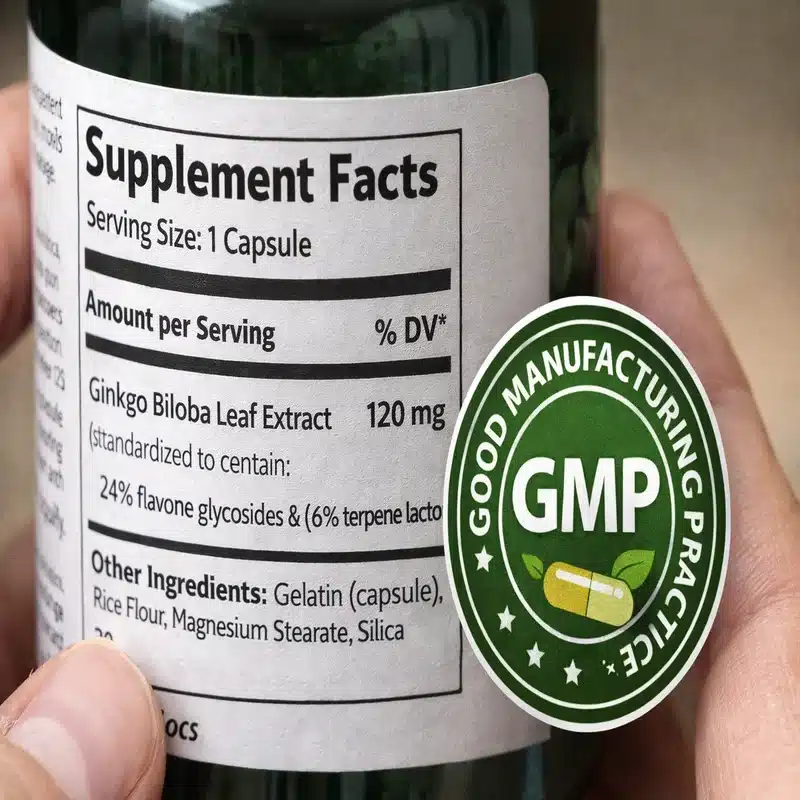
When reviewing a label, check for:
- Known allergens — soy, shellfish derivatives, gluten, dairy, or tree nuts where applicable
- Capsule material — gelatin capsules are not suitable for vegetarians or vegans; cellulose (HPMC) capsules are plant-based
- Proprietary blends — if multiple herbs are listed under a blend name without individual quantities, you cannot assess the dose of any single ingredient. Treat this as a transparency concern.
- Unnecessary additives — artificial colourings, sweeteners, or preservatives in a supplement can indicate low-quality formulation
If you take prescription medication, the excipients section is especially relevant, as some fillers affect absorption. When in doubt, seek guidance from a healthcare professional before proceeding.
6. Check Dosage Guidance and Usage Instructions Carefully
A legitimate herbal supplement provides clear instructions: how many capsules or tablets constitute a serving, how frequently to take them, whether to take with food, and the total daily amount of each active ingredient. Products that omit this information should not be purchased.
- Confirm serving size and how many servings the container holds
- Look for age restrictions, pregnancy and breastfeeding warnings, and known interaction notices
- Be cautious of products that encourage exceeding the recommended dose for faster results
- Avoid stacking multiple products with overlapping herbs — such as multiple products containing St. John’s Wort or Valerian — without professional guidance
A practical approach for new users: start one product at a time, follow label instructions precisely, and monitor how you respond over the first two to four weeks before adding anything else.
7. Know the Red Flags: When to Walk Away
Some warning signs are common enough to warrant a clear checklist. Reconsider a purchase if you notice any of the following:
- Medical-style claims — language such as “cures,” “reverses,” “clinically proven to treat,” or “FDA approved” (herbal supplements cannot legally carry FDA approval)
- No physical address or contact information for the seller or manufacturer
- No batch number, lot code, or expiry date visible on the product
- Prices significantly below market rate for the same product from verified sellers — a common indicator of counterfeit or diluted stock on third-party marketplace listings
- No returns policy or refusal to provide product details before purchase
- Testimonials replacing ingredient evidence — customer stories are not a substitute for label transparency
- Proprietary blends with no individual quantities listed for any ingredient
Always verify certification claims directly on the certifier’s official website rather than relying on a logo displayed on packaging or a product listing page.
A note on marketplace purchases: Buying herbal supplements through large third-party marketplaces carries added risk. Products sold by unauthorised resellers on these platforms may be counterfeit, improperly stored, or relabelled — even when the listing appears identical to a genuine product. Before purchasing from any marketplace seller, verify their identity, check seller feedback carefully, inspect product photos for packaging consistency, and confirm any certification claims directly with the certifier. When in doubt, buy direct from the brand or an authorised retailer.
8. Consider Herb-Drug Interactions Before You Buy
Herbal supplements can interact with prescription and over-the-counter medications in clinically significant ways — this is one of the most underestimated risks in self-directed supplement use. Some well-documented examples include:
- St. John’s Wort — known to reduce the effectiveness of anticoagulants, antiretrovirals, oral contraceptives, and cyclosporine
- Garlic and Ginkgo biloba — may increase bleeding risk when taken alongside blood thinners such as warfarin or aspirin
- Kava — associated with increased liver stress when combined with alcohol or hepatotoxic medications
- Valerian — may amplify the sedative effect of anaesthetics and certain psychiatric medications
The NCCIH provides detailed herb-drug interaction guidance and is a reliable starting point for researching any specific herb. Always disclose your full supplement list to your prescribing doctor or pharmacist before starting anything new.
9. Shipping, Storage, and Shelf Life for International Orders
Herbal supplements can be sensitive to heat, humidity, and prolonged transit — this is especially relevant when ordering internationally, where parcels may pass through warm environments or spend extended periods in customs.
- Confirm remaining shelf life before purchasing — many buyers prefer at least 6 to 12 months from the date of receipt
- Ensure the product ships sealed with tamper-evidence intact
- Follow storage instructions on arrival — most herbal supplements specify cool, dry storage away from direct light
- If a product arrives unsealed, damaged, or with inconsistent labelling, do not use it and contact the seller immediately
Recs-Medix ships internationally to the US, UK, Canada, Australia, and beyond with trackable delivery options including DHL Express for most destinations, with typical delivery of 3–5 business days depending on location and customs processing.
When to Consult a Healthcare Professional Before Buying
Certain personal health circumstances always warrant professional consultation before starting any herbal supplement:
- Pregnancy or breastfeeding — most herbal supplements have not been tested in pregnant or nursing individuals
- Taking any prescription medication, including anticoagulants, immunosuppressants, or antidepressants
- Managing a chronic health condition such as diabetes, hypertension, or liver or kidney disease
- Preparing for surgery or a medical procedure
- Purchasing supplements for children or elderly individuals
A qualified pharmacist is often the most accessible first point of contact for herb-drug interaction questions and can advise on whether a specific product is appropriate given your current medications.
Frequently Asked Questions About Choosing Safe Herbal Supplements Online
What is the most important thing to check when buying herbal supplements online?
Third-party certification is one of the strongest quality signals available. Look for a USP Verified, NSF International, or ConsumerLab seal — these programmes independently verify label accuracy, contaminant levels, and manufacturing standards. Always confirm certification status on the certifier’s official website, not just the product label.
Are herbal supplements regulated by the FDA?
In the United States, herbal supplements are classified as dietary supplements under the FDA’s DSHEA framework. The FDA does not approve supplements before they are sold — its role is primarily post-market. This is why independent third-party certification matters: it fills the quality gap that pre-market regulation does not cover.
What is a proprietary blend and why is it a concern?
A proprietary blend lists multiple ingredients under a single blend name with a combined weight but no individual quantities. This means you cannot determine how much of any single ingredient you are receiving per dose. Reputable products disclose individual ingredient amounts — treat the absence of this as a transparency concern.
What is the difference between whole herb powder and a standardised extract?
Whole herb powder contains the full plant spectrum and is generally gentler but more variable between batches. A standardised extract concentrates a specific compound to a defined level — for example, 95% curcuminoids in turmeric. Labels should state which form is used and provide the extract ratio or standardisation percentage.
Can herbal supplements interact with prescription medication?
Yes. Several herbs have documented interactions with prescription drugs. St. John’s Wort can reduce the effectiveness of anticoagulants, oral contraceptives, and antiretrovirals. Ginkgo biloba and garlic may increase bleeding risk alongside blood thinners. Always disclose your supplement use to your prescribing doctor or pharmacist before starting anything new.
What should I check when buying herbal supplements from an international seller?
Confirm the seller’s business identity and address, review the full ingredient label and expiry date, check for quality indicators such as GMP manufacturing and third-party certification, and ensure trackable shipping is available. Also understand the returns policy in case the product arrives damaged or unsealed.
Does ‘natural’ or ‘herbal’ mean a supplement is safe?
No. Natural origin does not automatically mean safe. Herbal ingredients can cause side effects, allergic reactions, or significant interactions with medications. Safety depends on product quality, accurate dosage guidance, and your personal health context. The word ‘natural’ on a label is a marketing term, not a quality certification.
Final Thoughts: A Responsible Approach on how to choose safe herbal supplements online
Checking supplement quality before you buy comes down to applying consistent, practical criteria: verify rather than assume, read labels in full, and prioritise sellers who are transparent over those who are persuasive. Third-party certification, clear ingredient disclosure, and honest dosage guidance are the three markers that separate quality products from poor ones — regardless of price or brand reputation.
To explore a curated range sourced from verified brands and shipped internationally with trackable delivery, browse the Recs-Medix Natural Herbal Remedies collection.
At Recs-Medix Natural Solutions, product education, sourcing transparency, and informed buying decisions are central to how we operate — for customers ordering locally and internationally.
This article is for educational purposes only and does not constitute medical advice. Always consult a qualified healthcare professional before starting any new supplement, particularly if you take prescription medication or have an existing health condition. Last reviewed: March 2026.